
Retro gaming is built on feel. The click of a D-pad, the resistance of a face button, and the subtle tension of an analog stick all shape the experience as much as the graphics on the screen. The debate between wired and wireless controllers for retro consoles is not just about convenience. It touches on authenticity, latency, comfort, reliability, and the way I physically connect to the hardware in front of me.
I have spent years rotating between original controllers, modern wireless replicas, and hybrid solutions that plug into original ports. After countless sessions with NES, SNES, Genesis, PlayStation, and Nintendo 64 hardware, I have developed strong opinions. Both wired and wireless options have real strengths, but they create different kinds of experiences. The difference is not always obvious until you sit down for a long session and pay attention to how your hands and reflexes respond.
The Authenticity Factor
Original wired controllers carry a certain presence. The cable trailing from the console to my hands creates a visible and physical link to the machine. That tether reminds me that I am interacting directly with aging hardware, not a modern reinterpretation.
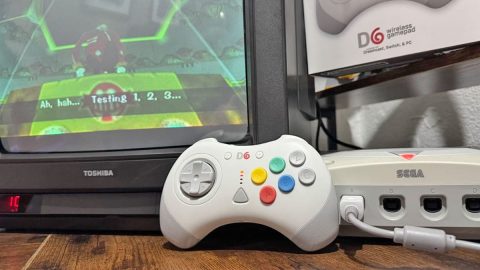
Wireless controllers, even when designed for retro systems, subtly change that atmosphere. The absence of a cable makes the setup cleaner, but it also removes part of the original ritual. Sitting on the floor a few feet from a CRT with a wired controller feels historically accurate in a way that wireless freedom cannot fully replicate.
Authenticity is not just emotional. The weight distribution of original wired controllers often differs slightly from wireless versions that contain batteries and transmitters. That change in balance can alter how the controller rests in my palms during extended play.
Latency And Input Precision
Latency is often the first technical concern people raise in this debate. With wired controllers, input travels directly through a physical connection to the console. The signal path is straightforward and immediate.
Modern wireless retro controllers have improved dramatically, and many boast near-zero lag. In casual play, I rarely notice a difference. However, in rhythm games or fast-paced platformers like Mega Man or Super Mario Bros., I sometimes sense a tiny softness in response compared to original wired hardware.
That difference may be psychological, but it influences my performance. Knowing that a wired controller has no battery level to monitor and no wireless handshake to maintain gives me confidence. In competitive or speed-focused sessions, I lean toward wired simply for peace of mind.
Comfort And Freedom Of Movement
Wireless controllers shine in comfort and flexibility. Being able to sit back on a couch without worrying about cable length feels liberating. I can reposition myself without tugging on the console or adjusting furniture.
In smaller rooms, wired cables can feel restrictive. Older consoles often came with relatively short cords, forcing players to sit close to the television. Extension cables solve this issue, but they add clutter and potential wear points.
Wireless controllers remove that limitation entirely. I can lean back, shift positions, or even stand while playing light gun games with modern adaptations. That physical freedom enhances comfort, especially during long RPG sessions.
Cable Wear And Hardware Preservation
Retro consoles are aging pieces of technology. Controller ports endure constant plugging and unplugging, and cables themselves degrade over time. Original wired controllers may have frayed cords or internal breaks after decades of use.
Wireless solutions reduce stress on original ports. Many connect through a small receiver that stays inserted, minimizing repeated wear. That small change can help preserve fragile hardware.
On the other hand, original wired controllers were built to last. Their thick cables and sturdy connectors often survive years of abuse. When a cable fails, it can sometimes be repaired, whereas a wireless controller with a dead internal battery or failing transmitter may be harder to service.
Battery Management And Reliability
Wired controllers never need charging. That simple fact becomes surprisingly important during marathon sessions. I never have to pause a game to swap batteries or connect a charging cable.
Wireless retro controllers rely on rechargeable batteries or replaceable cells. While battery life has improved significantly, it introduces another variable. I have had sessions interrupted by low battery warnings at inconvenient moments.
Planning ahead solves most of these issues, but it adds a layer of maintenance. With wired controllers, I plug in and play. That reliability aligns with the straightforward nature of retro gaming.
Clean Setups And Modern Living Spaces
Modern living rooms often prioritize minimalism. Tangled controller cords stretching across the floor do not always fit that aesthetic. Wireless controllers create a cleaner visual environment.
For players who connect retro consoles through upscalers to large flat-panel TVs, wireless solutions feel natural. The absence of cables makes the setup resemble modern gaming spaces while preserving classic gameplay.
Wired controllers, however, contribute to the visual nostalgia of a retro corner. Seeing the cable snake toward the console evokes memories of childhood sessions. That aesthetic can be part of the charm rather than a drawback.
Build Quality And Third-Party Options
Original wired controllers were manufactured by the console makers themselves. Their materials and internal components were built to match the hardware precisely. Many still function flawlessly decades later.
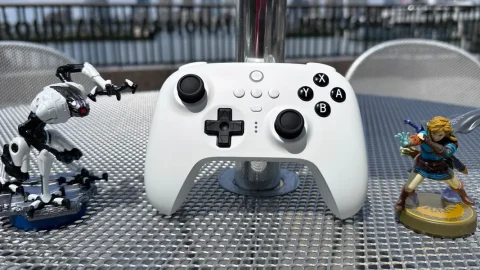
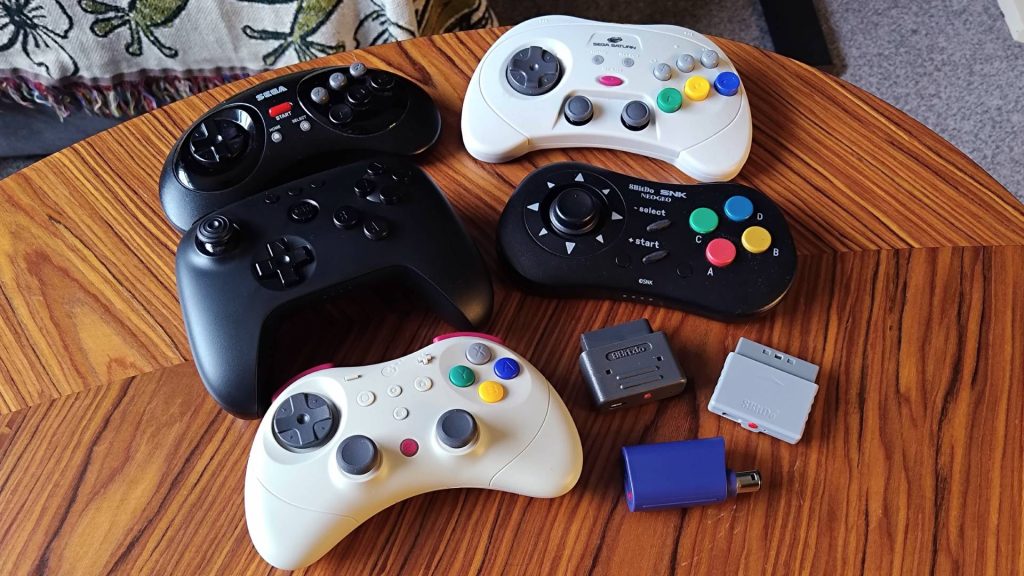
Wireless retro controllers are often produced by third-party companies. Some deliver exceptional build quality, while others feel lighter or less durable. Button membranes, D-pad pivots, and shell plastics vary significantly between brands.
I have handled wireless replicas that rival the originals in feel. I have also encountered models with slightly spongy buttons or less precise D-pads. The variability makes research important before committing to a wireless setup.
Multiplayer Dynamics
Multiplayer sessions highlight differences quickly. Wired controllers limit player positions based on cable length. In cramped spaces, that can create awkward seating arrangements.
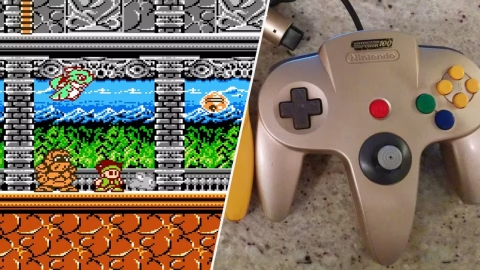
Wireless controllers open up the room. Friends can spread out comfortably without crossing cables. That freedom improves social sessions, especially with party games on consoles like the Nintendo 64.
However, wired multiplayer has its own energy. The visible connections between players and console create a shared focal point. Cables crossing over one another become part of the chaos and excitement of competitive matches.
Signal Interference And Stability
Wireless technology depends on stable signals. In most modern homes, interference is minimal, but it can happen. Nearby devices, thick walls, or crowded frequency bands may introduce rare hiccups.
Wired connections are immune to such issues. As long as the cable and port are intact, the signal remains consistent. That stability matters during precise gameplay moments.
I have rarely experienced serious interference with high-quality wireless retro controllers. Still, knowing that a wired controller eliminates that variable entirely adds reassurance during critical play.
The Feel Of Original Hardware
Original wired controllers carry subtle tactile qualities that are difficult to replicate perfectly. The exact texture of the plastic, the firmness of decades-old rubber membranes, and the slight looseness that develops over time all contribute to a unique feel.
Wireless replicas often attempt to match these characteristics. Some succeed impressively, while others feel slightly different in button height or D-pad pivot. Even minor differences become noticeable during extended sessions.
That tactile authenticity can influence immersion. Playing on original hardware with original controllers feels cohesive, as though all components were designed to function together without compromise.
Modern Features On Retro Hardware
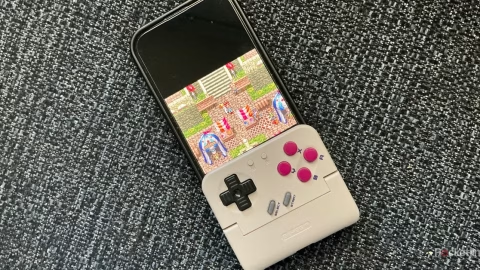
Wireless retro controllers sometimes include added features such as turbo buttons, home shortcuts, or compatibility with multiple systems. These enhancements introduce convenience that original wired controllers did not offer.
For certain genres, turbo functionality can reduce strain during rapid button presses. Built-in rechargeable batteries eliminate disposable cells, which feels environmentally responsible.
Yet additional features can complicate the experience. Extra buttons may alter the original layout, and internal components add weight. For purists, those changes may feel intrusive rather than helpful.
Long-Term Durability And Maintenance
Wired controllers are mechanically simple. If a button stops responding, I can often open the shell, clean the contacts, and restore functionality. Replacement parts for popular retro controllers remain widely available.
Wireless controllers integrate more complex circuitry. Battery degradation over years of charging cycles may reduce lifespan. When internal wireless components fail, repairs can be more challenging.
That difference affects long-term ownership. For collectors who value sustainability and repairability, wired controllers often hold an advantage. Their simplicity aligns with the mechanical design philosophy of older consoles.
Cost Considerations
Original wired controllers vary widely in price depending on condition and rarity. Some common models remain affordable, while others command high prices in collector markets.
Wireless retro controllers typically cost more upfront than generic wired replacements. However, they offer modern conveniences that may justify the expense.
Balancing cost against usage matters. For frequent players, investing in a high-quality wireless option may enhance comfort enough to warrant the price. For occasional sessions, original wired controllers may provide better value.
Personal Play Style And Preference
My own habits influence my preferences. During focused solo sessions on 16-bit platformers, I gravitate toward original wired controllers. The direct connection and authentic feel align with the era of the games.
For relaxed evenings playing RPGs or hosting multiplayer gatherings, wireless controllers often win. The comfort of leaning back without cable tension improves the overall atmosphere.
Neither option is universally superior. The choice depends on context, environment, and the type of experience I want that day.
Balancing Tradition And Convenience
Retro gaming exists at the intersection of preservation and enjoyment. Wired controllers represent tradition and historical accuracy. Wireless controllers represent adaptation and modern convenience.
Embracing both allows flexibility. I do not feel obligated to remain purely authentic or entirely modern. Instead, I rotate between setups based on mood and circumstance.
That balance reflects the broader retro community. Some players prioritize original hardware in pristine form, while others integrate contemporary solutions to extend usability. Both approaches honor the games themselves.
Final Thoughts
Wired vs wireless controllers for retro consoles is not a simple technical comparison. It is a question of how I want to experience the past in the present. Wired controllers offer reliability, authenticity, and mechanical simplicity that align closely with the original hardware. Wireless controllers provide comfort, flexibility, and modern convenience that fit seamlessly into contemporary living spaces.
I appreciate the strengths of both. On some nights, I want the unmistakable feel of an original cable stretching across the floor toward a glowing CRT. On others, I prefer the ease of sitting back freely, controller in hand, without physical constraints. Retro gaming thrives because it adapts while preserving its roots, and the controller I pick up is part of that evolving story.