
The sound of clinking coins and electronic jingles once defined entire afternoons of my life. Arcade cabinets lined the walls of malls, corner shops, and seaside boardwalks, glowing like portals into other worlds. Before home consoles dominated living rooms, arcades stood at the center of gaming culture, shaping not only how games were played but how they were designed, marketed, and remembered.
Arcades were more than entertainment venues. They were laboratories for innovation, social hubs for competition, and gateways that introduced millions of people to interactive digital experiences. Looking back at gaming history, it becomes clear that arcades did not simply participate in the story. They built the foundation on which the entire industry stands.
The Birth of the Arcade Phenomenon
Arcades emerged during a time when computers were massive, expensive machines hidden away in universities and research labs. Early coin-operated machines transformed complex technology into something approachable and exciting. By inserting a coin, anyone could interact with a digital system that responded instantly to their inputs.
The arrival of titles like Pong and Space Invaders changed the landscape of public entertainment. These games were simple by modern standards, yet they captured imaginations because they felt alive. Players were no longer passive observers of screens. They became active participants, controlling paddles, ships, and characters in real time.
I often think about how revolutionary that shift must have felt. For many people, arcades provided their first encounter with a responsive electronic world. That sense of novelty gave arcades an energy that spread quickly across cities and continents.
Arcades as Social Arenas
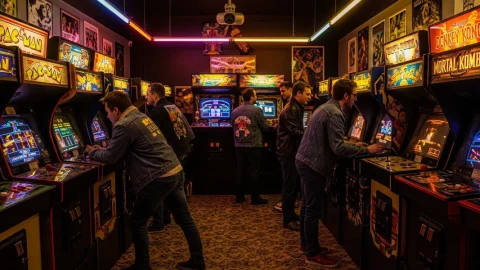
Arcades were loud, crowded, and intensely social. Groups of friends gathered around cabinets, not only to play but to watch and comment. The audience mattered almost as much as the player, especially when someone was on a long run or about to set a high score.
Competition thrived in that environment. High score tables displayed initials like badges of honor, turning three letters into a symbol of local fame. I remember studying those initials, wondering who “JTK” or “LMS” might be, and imagining the moment they secured their place at the top.
That public visibility encouraged skill development. Players practiced relentlessly to defend their ranking or dethrone a rival. Arcades transformed gaming into a performance, where mastery was witnessed and validated by others. This social dynamic laid the groundwork for competitive gaming long before online leaderboards and esports tournaments existed.
Design Built Around the Quarter
Arcade game design followed a different philosophy from modern console titles. Each session had to justify the coin inserted into the machine. Developers focused on delivering immediate engagement, intuitive controls, and escalating challenge to encourage repeat plays.
Difficulty curves were carefully calibrated. Games needed to be tough enough to prompt additional coins but fair enough to avoid frustration. I can still feel the tension of a final life slipping away, knowing that another coin was the only way to continue.
That economic model influenced creativity. Short, intense gameplay loops emerged because they fit the arcade format. Many iconic mechanics, from combo systems in fighting games to wave-based enemy patterns in shooters, were refined in arcades. The necessity of earning coins pushed developers to innovate rapidly and refine their ideas with precision.
Technological Showcases of Their Time
Arcade cabinets often featured hardware more powerful than what home consoles could handle. This technological advantage allowed arcades to showcase advanced graphics, smoother animations, and richer sound design. Walking into an arcade felt like stepping into the future of entertainment.
Games like Out Run and After Burner impressed players with vibrant visuals and immersive cabinet designs. Some machines included steering wheels, hydraulic seats, or light guns, enhancing realism. I remember gripping oversized controllers that made me feel like I was piloting a spaceship or driving a race car at impossible speeds.
These technological leaps influenced expectations for home gaming. Players who experienced cutting-edge arcade graphics demanded similar quality in their living rooms. In many ways, arcades set the benchmark that console manufacturers aimed to meet or surpass.
The Golden Age and Cultural Impact
The late 1970s and 1980s marked what many consider the golden age of arcades. Titles like Pac-Man, Donkey Kong, and Galaga became cultural phenomena. Characters from these games appeared on merchandise, television shows, and lunchboxes, embedding themselves in popular culture.
Arcades were not confined to one demographic. Teenagers flocked to them, but adults and younger children joined as well. That cross-generational appeal broadened the audience for video games and proved their commercial viability.
I see that era as a turning point. Gaming shifted from niche curiosity to mainstream entertainment. Arcades demonstrated that interactive digital experiences could generate massive revenue and capture public imagination on a global scale. Without that validation, the console boom that followed might have looked very different.
Arcades as Testing Grounds for Genres
Many of today’s most beloved genres were refined in arcades. Fighting games, for instance, found their identity in competitive arcade settings. Titles like Street Fighter II created intense face-to-face battles that electrified entire rooms.
Shooters also thrived in arcades. Vertical and horizontal scrolling shooters challenged reflexes and pattern recognition. Players memorized enemy placements and perfected strategies to survive longer and score higher.
I have always admired how arcades fostered experimentation. Developers could gauge player reactions quickly, adjusting sequels and updates based on feedback. That rapid iteration encouraged bold ideas, some of which evolved into lasting genre standards. Arcades functioned as creative incubators, allowing concepts to mature before reaching home systems.
The Transition to Home Consoles
As technology advanced, home consoles began narrowing the gap with arcade hardware. Systems like the NES and Sega Genesis delivered experiences that felt closer to arcade quality. Ports of popular arcade titles allowed players to practice without spending coins.
This shift changed the industry. While arcades remained popular, their exclusivity weakened. I remember the excitement of owning a home version of an arcade favorite, practicing endlessly to improve without worrying about running out of credits.
The transition did not erase arcades immediately, but it altered their role. They became places to experience the newest innovations before they trickled down to consoles. Over time, however, convenience and cost-effectiveness favored home gaming, leading to a gradual decline in traditional arcades.
The Decline and Reinvention
By the late 1990s and early 2000s, many arcades struggled to compete with powerful consoles and online gaming. Empty cabinets replaced once-busy machines, and some venues closed their doors permanently. Watching that decline felt bittersweet, as spaces filled with memories slowly disappeared.
Yet arcades did not vanish entirely. They reinvented themselves in various forms, from rhythm game hubs in Japan to modern barcades in urban centers. These spaces blend nostalgia with contemporary social culture, attracting both veteran players and curious newcomers.
Visiting a modern arcade feels different from the past, but the core spirit remains. The shared excitement of watching someone master a difficult stage or achieve a high score still resonates. Reinvention has allowed arcades to maintain relevance in a changing industry.
The Emotional Legacy of Arcades
Arcades left a deep emotional imprint on those who experienced them. They were places of triumph and frustration, friendship and rivalry. My memories of arcades are tied to specific sounds and smells, from the hum of machines to the faint scent of popcorn drifting through the air.
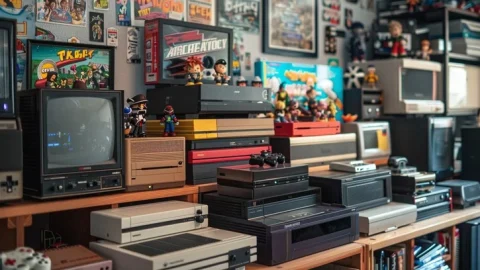
These emotional connections continue to influence retro gaming culture. Collectors seek original cabinets, and developers design indie games inspired by arcade aesthetics. The legacy of arcades extends beyond hardware and software. It lives in the collective memory of a generation.
That emotional weight explains why arcades occupy such a prominent place in gaming history discussions. They represent a communal chapter, one defined by shared physical spaces rather than isolated online sessions.
Arcades and the Birth of Competitive Gaming
Competitive gaming did not begin with streaming platforms or esports arenas. It began in arcades, where players faced each other across cabinets or stood shoulder to shoulder in pursuit of high scores. The intensity of those encounters set the stage for organized tournaments.
Fighting game communities, in particular, owe much to arcade culture. Local rivalries evolved into regional competitions, and eventually international championships. The structure of modern esports, complete with spectators and commentators, echoes the atmosphere of crowded arcade rooms.
I see a direct line from those early competitions to today’s global tournaments. The desire to prove skill in front of others has remained constant. Arcades provided the first physical arenas where that desire could flourish.
Preservation and Historical Recognition
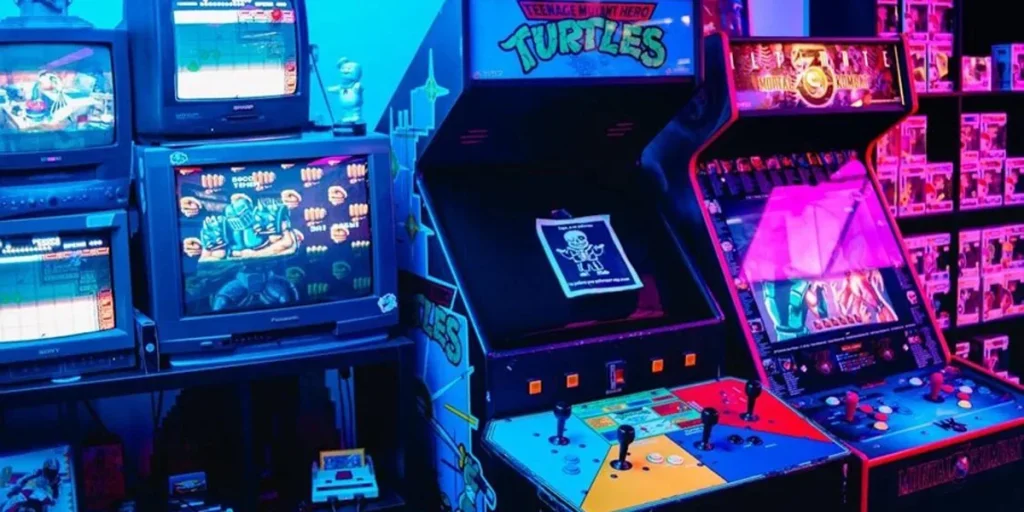
Arcade cabinets are now treated as historical artifacts. Enthusiasts restore machines, replacing worn parts and preserving original artwork. Museums and exhibitions highlight arcade games as milestones in digital culture.
Preservation matters because many arcade experiences were tied to specific hardware configurations. Emulation captures gameplay, but it cannot fully replicate the feel of an original cabinet. I appreciate the effort that goes into maintaining these machines, as they offer tangible connections to gaming’s formative years.
Recognition from cultural institutions further solidifies the importance of arcades. Their inclusion in exhibitions and academic research confirms what many of us have long believed. Arcades were not trivial amusements. They were foundational pillars of a transformative industry.
Arcades in Today’s Retro Landscape
Retro gaming communities frequently celebrate arcade classics. Collections often include arcade boards or miniature cabinet replicas. Indie developers draw inspiration from pixel art styles and fast-paced mechanics pioneered in arcade halls.
I find it fascinating how arcade design principles persist in modern games. Tight gameplay loops, skill-based progression, and score chasing remain popular elements. Even mobile games borrow the short-session intensity that arcades perfected decades ago.
The continued influence of arcades demonstrates their lasting relevance. Though their physical presence has diminished compared to their peak, their design DNA remains embedded in contemporary gaming.
Final Thoughts
Arcades shaped gaming history in profound and lasting ways. They introduced interactive entertainment to mass audiences, fostered competitive communities, and pushed technological boundaries. My experiences in arcades continue to influence how I view games today, reminding me that gaming began as a shared public adventure.
The role of arcades extends beyond nostalgia. They established economic models, design philosophies, and cultural norms that still echo throughout the industry. From crowded rooms filled with flashing lights to modern esports arenas, the spirit of the arcade lives on.
Gaming history cannot be told without arcades at its center. They were the proving grounds, the social stages, and the spark that ignited a global phenomenon. Their impact remains visible in the games we play, the communities we build, and the memories we carry forward.