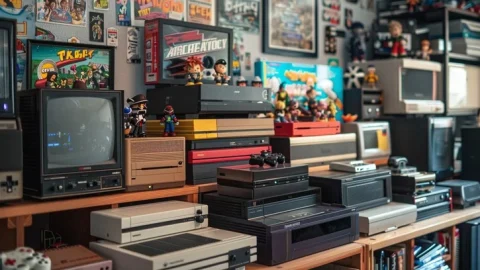

A familiar startup sound can shift my mood in seconds. One chime from an old console and I am no longer focused on deadlines or daily routines. My mind drifts back to carpeted floors, bulky televisions, and afternoons that felt endless. The psychology of nostalgia in gaming runs deeper than simple fondness for old titles. It taps into memory, identity, emotion, and even the way the brain organizes experience.
Retro games do not just remind me of what I played. They remind me of who I was while playing them. That distinction matters. Nostalgia in gaming is not about pixels alone. It is about time, context, and the emotional imprint those moments left behind.
Memory as an Emotional Archive
The brain does not store memories like a filing cabinet. It links them to emotions, smells, sounds, and physical sensations. When I revisit a retro game, I rarely recall only the mechanics. I remember the room, the time of year, and even the conversations happening nearby.
Gaming memories are often encoded during formative years. Emotions tend to feel stronger in childhood and adolescence, which gives those experiences extra weight. A difficult boss battle or a triumphant victory becomes fused with that heightened emotional state.
The psychology of nostalgia in gaming thrives on this fusion. A simple visual cue can unlock an entire network of associations. The game becomes a trigger that reactivates a past version of myself.
The Comfort of Familiar Patterns
Retro games often operate on simple, repeatable loops. Clear objectives, consistent mechanics, and predictable feedback create a sense of order. Returning to those systems feels reassuring.
Familiarity reduces cognitive strain. I do not need to decipher complex menus or absorb layers of new mechanics. My hands remember what to do before I consciously think about it. That fluency produces comfort.
Nostalgia strengthens this effect. The predictability of retro gaming becomes a refuge from the uncertainty of adult life. The psychology of nostalgia in gaming includes this desire for stable patterns in a world that constantly shifts.
Identity and Personal History
Games from earlier stages of life often align with periods of personal growth. Certain titles are tied to childhood independence, teenage friendships, or early creative curiosity. Revisiting them feels like flipping through a personal journal.
I see how my preferences formed over time. The genres I gravitated toward reveal aspects of my personality that remain consistent. Action games, puzzle challenges, or story-driven adventures each reflect something deeper.
The psychology of nostalgia in gaming intersects with identity formation. Retro titles act as landmarks in a timeline of self-development. They help me trace who I have been and how I have changed.
Shared Nostalgia and Social Bonds
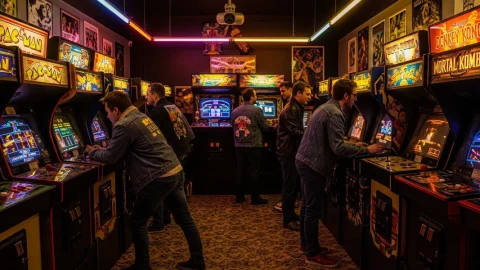
Nostalgia rarely exists in isolation. Conversations about retro games often spark immediate connection. Mentioning a specific level or character can lead to animated exchanges filled with shared references.
Collective memory amplifies individual nostalgia. When someone else recalls the same moment with similar enthusiasm, the experience feels validated. It reinforces the idea that those memories mattered.
The psychology of nostalgia in gaming includes this social dimension. Shared recollection strengthens bonds by confirming common ground. The games become social glue that holds distant memories together.
The Brain’s Preference for Highlight Reels
Human memory tends to soften rough edges over time. Frustrating difficulty spikes and clunky mechanics fade, while standout moments remain vivid. This selective recall shapes how I perceive older games.
A retro title might have included tedious sections that I barely remember. What stands out are the victories, the music, and the atmosphere. The mind edits its own footage, preserving the highlights.
The psychology of nostalgia in gaming involves this gentle distortion. The brain filters past experiences to emphasize emotional peaks. As a result, revisiting a classic can feel both familiar and surprisingly different from memory.
Sound as a Direct Pathway
Music plays a powerful role in nostalgic response. A short melody from an 8-bit soundtrack can trigger an emotional shift almost instantly. Sound bypasses analytical thought and connects directly with memory.
Game audio loops repeated for hours during childhood. Those repeated exposures strengthened neural connections. Hearing them again activates those same pathways with surprising intensity.
The psychology of nostalgia in gaming relies heavily on this sensory shortcut. Soundtracks function like keys, unlocking rooms in memory that words alone cannot reach.
Control, Competence, and Mastery
Retro games often required persistence and pattern recognition. Overcoming their challenges built a sense of competence. Revisiting them reminds me of that earlier resilience.
Nostalgia can restore confidence by reconnecting me with moments of mastery. Completing a difficult level years ago becomes symbolic of broader capability. The achievement carries emotional residue.
The psychology of nostalgia in gaming includes this reaffirmation of skill. It reinforces the idea that challenges can be overcome with effort. That message resonates beyond the screen.
Escapism and Emotional Regulation
Life inevitably introduces stress, complexity, and uncertainty. Returning to a retro game offers a controlled environment with clear rules. The stakes are defined and manageable.
Engaging with nostalgic media can regulate mood. Familiar visuals and sounds create a sense of safety. The mind recognizes the environment as non-threatening.
The psychology of nostalgia in gaming connects to emotional self-regulation. Revisiting older titles can soothe anxiety or sadness by grounding me in stable, predictable experiences from the past.
The Passage of Time Made Visible
Retro graphics and design philosophies reveal how far technology has progressed. Playing older games highlights the contrast between past and present. That contrast intensifies awareness of time passing.
Nostalgia carries both warmth and melancholy. The joy of revisiting a beloved title often comes with recognition that the era it represents is gone. That duality gives nostalgic gaming a bittersweet quality.
The psychology of nostalgia in gaming embraces this tension. It allows space for gratitude and reflection, acknowledging growth while honoring earlier chapters.
Why Remakes and Remasters Succeed
Modern remakes tap directly into nostalgic psychology. They blend familiar structure with updated visuals and mechanics. The result satisfies memory while adapting to contemporary expectations.
Playing a remake often feels like reconnecting with an old friend who has matured. The core identity remains intact, but the presentation evolves. That balance can feel deeply satisfying.
The psychology of nostalgia in gaming explains why these projects resonate. They validate past attachment while inviting renewed engagement.
Nostalgia as a Creative Force
Many independent developers draw inspiration from retro aesthetics and mechanics. Pixel art, chiptune music, and straightforward gameplay loops continue to thrive. These choices are often intentional rather than constrained by hardware.
Nostalgia fuels creative expression. Designers who grew up with certain games channel those influences into new projects. The result is a cycle where past inspiration shapes future innovation.
The psychology of nostalgia in gaming demonstrates how memory can drive creativity. Instead of trapping players in the past, it inspires reinterpretation and reinvention.
The Risk of Idealization
Nostalgia can also obscure flaws. Revisiting a cherished title sometimes reveals awkward controls or pacing issues I once ignored. The memory of the experience may outshine the reality.
This gap does not necessarily diminish the value of the memory. It highlights how perception evolves over time. Growth changes expectations and tolerance.
The psychology of nostalgia in gaming includes this recalibration. It reminds me that memories are emotional snapshots rather than objective records.
Generational Continuity
Sharing retro games with younger players introduces another layer of nostalgia. Watching someone encounter a beloved classic for the first time feels surreal. Their reactions blend curiosity with confusion at outdated mechanics.
These moments bridge generational gaps. Conversations emerge about design evolution and cultural context. The game becomes a shared reference point across age differences.
The psychology of nostalgia in gaming supports this continuity. It transforms individual memory into collective experience, passing stories forward rather than leaving them isolated in the past.
Why Nostalgia Endures
Nostalgia persists because it connects emotion, identity, and memory into a cohesive narrative. Retro games act as anchors within that narrative. They mark stages of growth and moments of connection.
Revisiting them does not simply recreate past joy. It reframes it within present awareness. The experience becomes layered, blending then and now.
The psychology of nostalgia in gaming reveals that these returns are not escapist fantasies alone. They are acts of reflection and reaffirmation.
Final Thoughts
The psychology of nostalgia in gaming extends far beyond fond memories of old consoles. It reflects how the brain stores emotion, how identity evolves, and how shared experiences shape connection. Retro games serve as catalysts that activate complex networks of memory and feeling.
Replaying a childhood favorite reconnects me with earlier versions of myself. It highlights growth while preserving the essence of who I was. The familiar sounds and visuals carry emotional weight that transcends technical limitations.
Nostalgia in gaming is not about resisting progress. It is about honoring the experiences that shaped perspective and passion. Retro titles endure because they are woven into personal history. Each time I return to them, I do not just revisit a game. I revisit a chapter of my own story, guided by the quiet but powerful psychology of nostalgia.