
Difficulty was once a defining feature of video games, not an optional setting tucked away in a menu. Long before checkpoints became generous and tutorials explained every mechanic, games expected precision, patience, and persistence. Playing retro titles today makes that expectation immediately clear, especially when failure sends you back to the very beginning with nothing but hard-earned experience to show for it. Even in 2026, these games still demand respect, and they rarely offer mercy.
What keeps drawing me back to the hardest retro games ever made is not frustration alone, but the strange satisfaction they deliver. These titles test reflexes, memory, and mental endurance in ways that modern games often avoid. Victory feels earned because it comes only after repeated failure, careful observation, and genuine improvement. The challenge may feel brutal, but it also feels honest.
Ghosts ’n Goblins and the Art of Punishment
Ghosts ’n Goblins is often the first game mentioned in any discussion about punishing difficulty, and that reputation is well deserved. Enemy placement feels deliberately cruel, with projectiles flying in unpredictable patterns and hazards placed exactly where panic sets in. Armor disappears after a single hit, leaving the hero vulnerable and exposed in a way that never stops being stressful.
What elevates the challenge even further is the game’s demand for perfection. Finishing the final level once is not enough, as the entire game must be completed again to reach the true ending. That requirement alone pushes the experience from difficult into legendary territory. Each run forces tighter movement, better timing, and sharper memory, turning the game into a relentless test of consistency.
Battletoads and Unfair Expectations
Battletoads gained its fearsome reputation largely because it refuses to play fair. The difficulty spikes arrive without warning, often shifting genres mid-level and demanding entirely different skills. One moment focuses on combat, while the next becomes a high-speed obstacle course with no room for error.
The infamous Turbo Tunnel remains a rite of passage that many players never complete. Reaction time must be perfect, and memorization becomes essential for survival. Even cooperative play does not offer relief, as friendly fire and shared screen chaos often make things worse. The game feels designed to overwhelm, and it succeeds far more often than it fails.
Ninja Gaiden and Relentless Precision
Ninja Gaiden stands out because of how tightly designed its difficulty feels. Enemies respawn aggressively, knocking the player into pits with frustrating regularity. The game demands constant forward momentum, punishing hesitation just as harshly as reckless movement.
Boss fights elevate the challenge further, requiring near-perfect execution. Patterns must be learned quickly, and mistakes carry severe consequences. Despite the frustration, the controls remain responsive, which keeps the experience from feeling cheap. Success depends entirely on skill, making every victory feel deeply satisfying.
Contra and the Value of Memorization
Contra delivers difficulty through sheer intensity. Enemies flood the screen from every direction, and survival depends on sharp reflexes and precise shooting. Even with the famous extra lives code, the game remains a serious challenge that tests focus and endurance.
Memorization plays a huge role in progress, as enemy waves follow fixed patterns. Learning when to move, jump, or fire becomes the key to survival. Without that knowledge, progress feels nearly impossible. With it, the game transforms into a demanding but fair test of execution.
Castlevania and Calculated Movement
Castlevania approaches difficulty through deliberate pacing and stiff controls. Every jump must be planned, and every attack carries commitment. The game punishes impulsive decisions, forcing careful movement through enemy-filled corridors and deadly traps.
Boss encounters emphasize pattern recognition and patience. Rushing in usually leads to failure, while careful observation reveals narrow windows for attack. The challenge feels methodical rather than chaotic, which gives the game a unique rhythm. Mastery comes from restraint as much as aggression.
Silver Surfer and Near-Impossible Design
Silver Surfer has become infamous for its extreme difficulty and unforgiving design. The player character dies in a single hit, while enemies and projectiles fill the screen relentlessly. Visual clutter makes it difficult to track threats, turning survival into an overwhelming task.
What makes the game particularly brutal is how little room it offers for recovery. One mistake ends the run, often after long stretches of careful play. Progress depends on memorizing every obstacle and maintaining flawless execution. Few games demand that level of precision from start to finish.
Teenage Mutant Ninja Turtles and Sudden Spikes
The original Teenage Mutant Ninja Turtles game surprises players with its uneven difficulty curve. Early levels feel manageable, only to introduce sudden spikes that halt progress completely. The infamous underwater bomb-defusing section stands out as a major obstacle.
Limited visibility, strict time limits, and precise movement requirements combine into a perfect storm of frustration. Failing this section sends the player back without mercy. The rest of the game continues this trend, mixing manageable combat with moments of overwhelming pressure. It rewards persistence but offers little guidance.
Mega Man and Mechanical Mastery
Mega Man games are difficult, but rarely unfair. Each stage demands precise platforming, accurate shooting, and quick decision-making. Enemy patterns require memorization, while bosses test reflexes and adaptability.
What makes these games particularly challenging is their demand for consistency. A single mistake can erase minutes of progress. Learning weapon weaknesses provides an advantage, but execution still matters most. The difficulty feels balanced around mastery rather than endurance alone.
Punch-Out!! and Pattern Recognition
Punch-Out!! delivers difficulty through observation rather than raw reflexes. Opponents follow specific patterns that must be learned and exploited. Without understanding these tells, victory is nearly impossible.
Later fighters increase the challenge by mixing patterns and reducing reaction windows. Timing must be perfect, and mistakes are punished severely. The game demands patience and focus, rewarding players who study behavior rather than rely on brute force. Each win feels like solving a complex puzzle under pressure.
Double Dragon III and Overwhelming Odds
Double Dragon III takes the familiar beat ’em up formula and pushes it toward frustration. Enemies hit harder, appear in greater numbers, and offer fewer opportunities for recovery. The difficulty often feels tuned for arcade-style coin consumption rather than home enjoyment.
Movement and attack animations leave little room for error. Getting surrounded usually leads to defeat, and health drains quickly. Progress depends on careful positioning and conservative play. Even then, success feels uncertain until the final moments.
The Lost Levels and Ruthless Design
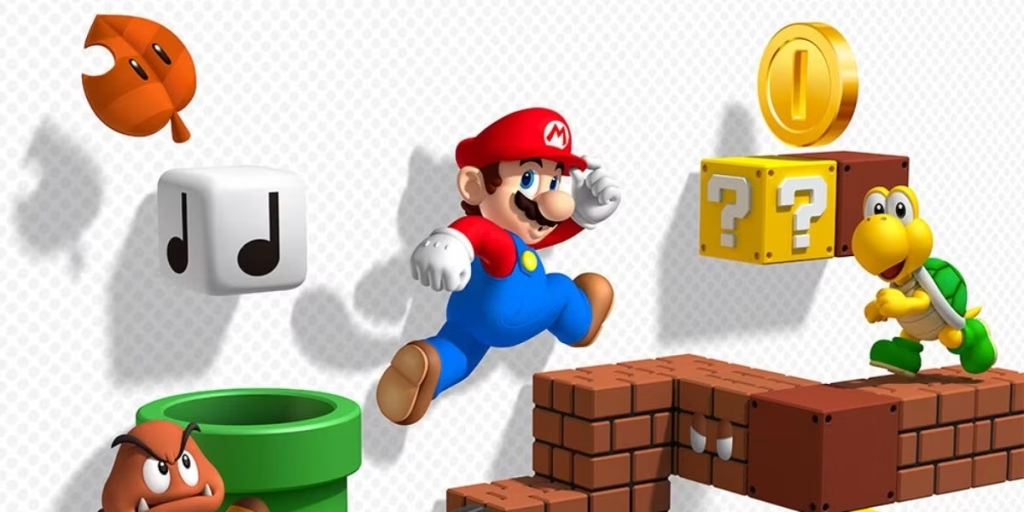
Super Mario Bros.: The Lost Levels earns its reputation through merciless level design. Traps appear without warning, and familiar mechanics are twisted into lethal surprises. Poison mushrooms and invisible blocks punish assumptions learned from earlier games.
Precision becomes essential, as jumps require exact timing and positioning. The margin for error is extremely small, especially in later stages. The game feels like a challenge created specifically for experienced players seeking punishment rather than casual fun.
Why These Games Still Matter
The hardest retro games ever made continue to matter because they represent a different design philosophy. Difficulty was not smoothed out to appeal to everyone. Instead, it acted as a gatekeeper that demanded commitment and patience.
Playing these games today highlights how much modern design has shifted. Checkpoints, accessibility options, and tutorials now soften failure. These older titles offer a reminder of how rewarding mastery can feel when success is not guaranteed. The struggle becomes part of the experience rather than an obstacle to it.
Another reason these games remain relevant is their clarity. Rules are strict, but they are consistent. Failure usually feels deserved, even when frustration runs high. That honesty builds respect, even when progress stalls for hours.
Final Thoughts
The hardest retro games ever made continue to challenge players decades after their release. They test reflexes, memory, patience, and mental endurance in ways that few modern games attempt. Each victory feels meaningful because it represents real improvement rather than borrowed progress.
Returning to these titles in 2026 feels like stepping into a proving ground. They offer no shortcuts and little forgiveness, but they reward persistence with genuine satisfaction. That balance between frustration and triumph is why these games still command attention, long after easier paths became the norm.