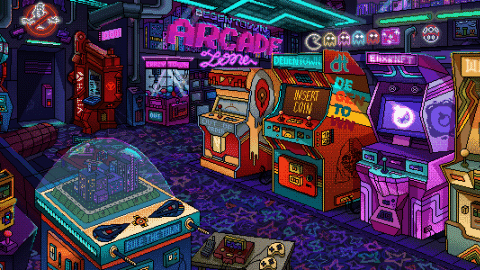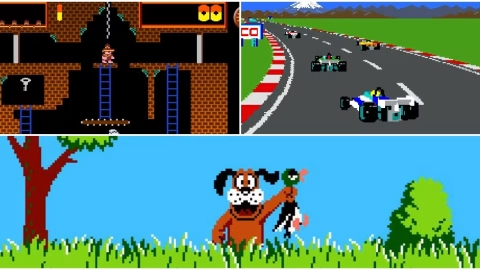

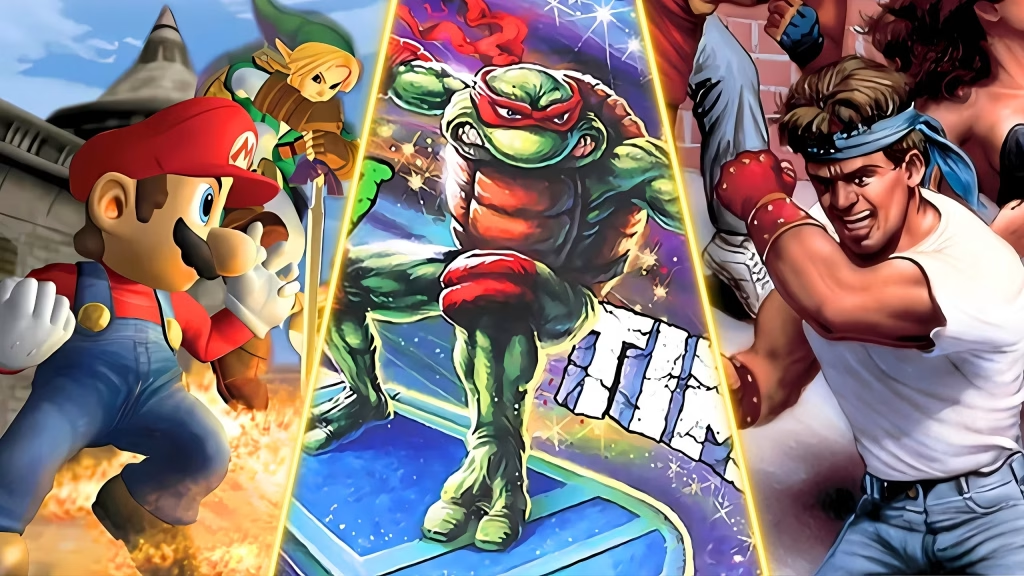
Retro games did more than entertain a generation; they quietly built the foundation for how modern games look, feel, and play today. Spending time with old consoles and arcade cabinets makes it clear that many mechanics we now take for granted were born out of necessity, experimentation, and limited technology. Developers in the early days were forced to be inventive, and those inventions still echo through contemporary design. Modern graphics may be flashier, but the DNA of today’s biggest titles can often be traced back to simple sprites and beeping sound chips.
Looking back at these games now, what stands out most is how deliberate their design choices were. Limited memory, small development teams, and strict hardware constraints meant every mechanic had to earn its place. That focus on clarity and purpose is something modern developers still strive for, even with vastly more powerful tools. Retro games shaped modern game design not by accident, but by solving problems in clever and lasting ways.
Super Mario Bros. And the Language of Platforming
Super Mario Bros. did more than popularize platformers; it taught players how to play without using words. The opening level subtly introduces running, jumping, enemies, and power-ups through level layout alone. That kind of silent instruction is now a cornerstone of good game design. Tutorials embedded directly into gameplay are standard practice today, and Mario set that template decades ago.
The game also established the idea of tight, responsive controls as a core design principle. Jump arcs were predictable, movement felt precise, and mistakes always felt like the player’s fault rather than the game’s. Modern platformers, from indie titles to big-budget releases, still chase that same sense of control. Super Mario Bros. showed that how a game feels to play matters just as much as how it looks.
The Legend of Zelda And Open-Ended Exploration
The Legend of Zelda introduced a sense of freedom that was rare at the time. Instead of pushing players down a single path, it encouraged wandering, experimentation, and curiosity. Secrets were hidden everywhere, rewarding players who paid attention and took risks. That feeling of discovery is now a defining feature of open-world design.
Modern games often guide players with maps, icons, and quest markers, but the core idea remains the same. Exploration should feel meaningful, not mandatory. Zelda proved that giving players space to get lost could be more engaging than constant direction. Many modern developers still reference that original design philosophy when talking about player agency and world building.
Metroid And Environmental Storytelling
Metroid quietly changed how games told stories. Instead of relying on dialogue or cutscenes, it used atmosphere, level design, and isolation to communicate its narrative. The empty corridors, eerie music, and lack of hand-holding created a sense of loneliness that stuck with players. Story wasn’t something you were told; it was something you felt.
This approach directly influenced how modern games handle environmental storytelling. Games now use lighting, sound design, and world details to convey emotion and plot without interrupting gameplay. Metroid showed that silence and restraint could be powerful tools. That lesson continues to shape how designers build immersive worlds today.
Doom And the Foundations of First-Person Shooters
Doom didn’t invent the first-person shooter, but it defined what the genre could be. Fast movement, responsive aiming, and an emphasis on momentum created a sense of flow that modern shooters still chase. The game encouraged aggression and rewarded players for staying on the move rather than hiding behind cover.
Beyond gameplay, Doom also shaped technical and community aspects of modern design. Its support for mods and custom levels fostered a creative community that extended the game’s lifespan. Today’s mod-friendly games and user-generated content owe a lot to Doom’s open approach. It proved that giving players tools could turn a game into a platform.
Street Fighter II And Competitive Balance
Street Fighter II transformed fighting games into a competitive genre. Before its release, fighters were often shallow and forgettable. Street Fighter II introduced distinct characters with unique moves, strengths, and weaknesses. Balance became a design goal rather than an afterthought.
This focus on fairness and skill-based play laid the groundwork for esports culture. Frame data, matchups, and competitive tiers all trace back to ideas refined in this game. Modern competitive games still wrestle with the same balance challenges Street Fighter II faced. Its influence goes far beyond fighting games, shaping how developers think about multiplayer fairness.
Tetris And Perfect Simplicity
Tetris is proof that great design does not need complexity. The rules are simple, the visuals are basic, and yet the game remains endlessly engaging. Its core loop is easy to understand but difficult to master, which is a balance modern designers constantly aim for. Many mobile and casual games follow this same philosophy.
The game also demonstrated the power of universal design. Tetris transcended language, culture, and age in a way few games ever have. Modern designers often reference it when discussing accessibility and intuitive mechanics. Tetris showed that elegance can outlast technological advancement.
Final Fantasy And Emotional Storytelling
Early Final Fantasy games helped shape how RPGs tell stories. They combined gameplay progression with emotional arcs, memorable characters, and dramatic moments. These games proved that players could form strong emotional connections to digital characters. That idea now underpins narrative-driven design across genres.
The series also refined systems like party management, turn-based combat, and character growth. Modern RPGs still build on these foundations, even when shifting to real-time combat. Final Fantasy demonstrated that mechanics and story could support each other rather than compete for attention.
SimCity And Player-Driven Systems
SimCity introduced the idea that a game world could function as a complex system rather than a linear challenge. Players weren’t trying to win in a traditional sense; they were managing cause and effect. Decisions had long-term consequences, and failure was part of the learning process.
This systems-based approach influenced countless simulation and strategy games. Modern city builders, management sims, and even sandbox games draw inspiration from SimCity’s design philosophy. It taught designers that giving players tools and rules could create emergent stories more compelling than scripted ones.
Mega Man And Skill-Based Progression
Mega Man emphasized learning through repetition and mastery. Levels were challenging, enemy patterns were strict, and success required practice. The ability to choose stage order added a layer of strategy that rewarded player insight. That sense of earned progress remains central to modern difficulty design.
Many contemporary games now embrace challenge as a feature rather than a barrier. The idea that failure teaches rather than punishes can be traced back to games like Mega Man. Its influence is especially clear in modern action games that value precision and timing.
Pac-Man And Iconic Game Identity
Pac-Man demonstrated the importance of clear identity in game design. Its simple visuals, memorable sound effects, and distinct characters made it instantly recognizable. The game appealed to a wider audience than many of its contemporaries, expanding the idea of who games were for.
Modern developers still chase that kind of clarity and branding. A strong visual and audio identity can make a game stand out in a crowded market. Pac-Man proved that personality and accessibility could drive success just as much as technical achievement.
Why These Games Still Influence Design Today
What ties all these games together is intention. Each one solved a specific problem or explored a new idea in a way that felt purposeful. Modern game design often revisits these solutions, adapting them to new technology and player expectations. The tools have changed, but the core challenges remain the same.
Playing these retro games now offers insight into why certain design conventions exist. Save points, tutorials, difficulty curves, and progression systems all evolved from early experimentation. These games didn’t just entertain; they taught future designers how to think.
Final Thoughts
Retro games that shaped modern game design did so by focusing on clarity, creativity, and player experience. Their influence is visible in nearly every genre today, from sprawling open-world adventures to minimalist indie titles. Revisiting them is more than an exercise in nostalgia; it’s a reminder of how thoughtful design can stand the test of time. Modern games may look different, but their roots are firmly planted in the past.