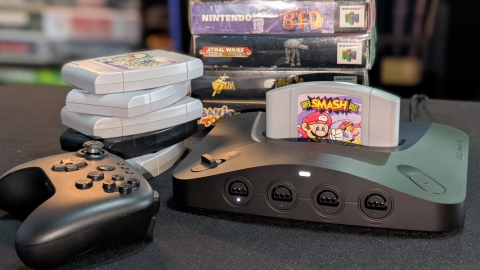

The Nintendo 64 landed at a strange and exciting moment in gaming history. The industry was moving fast toward 3D worlds, cinematic presentation, and bigger ambitions, and expectations were sky-high. Nintendo’s answer was bold, unconventional, and confident in its own identity. That confidence produced some of the most influential games ever made, while also introducing decisions that limited the system in ways that are still debated today.
Looking back, the Nintendo 64 feels like a console built on risk. It didn’t chase trends blindly or copy competitors. Instead, it doubled down on Nintendo’s belief in gameplay-first design, even when that belief came with serious tradeoffs. That tension between brilliance and frustration is exactly what makes the system so fascinating to revisit.
A Leap Into Fully Realized 3D
The Nintendo 64 wasn’t Nintendo’s first experiment with 3D, but it was the company’s first true commitment to it. This console was designed around three-dimensional movement, space, and perspective. That focus was immediately clear the moment a controller was picked up and a character moved freely through a world instead of along a flat plane.
I still feel that sense of shock when thinking about how natural it felt to explore open environments for the first time. Camera control, depth perception, and analog movement were suddenly central parts of gameplay. The Nintendo 64 didn’t just add a new dimension, it forced developers and players to relearn how games worked from the ground up.
The Controller That Changed Everything
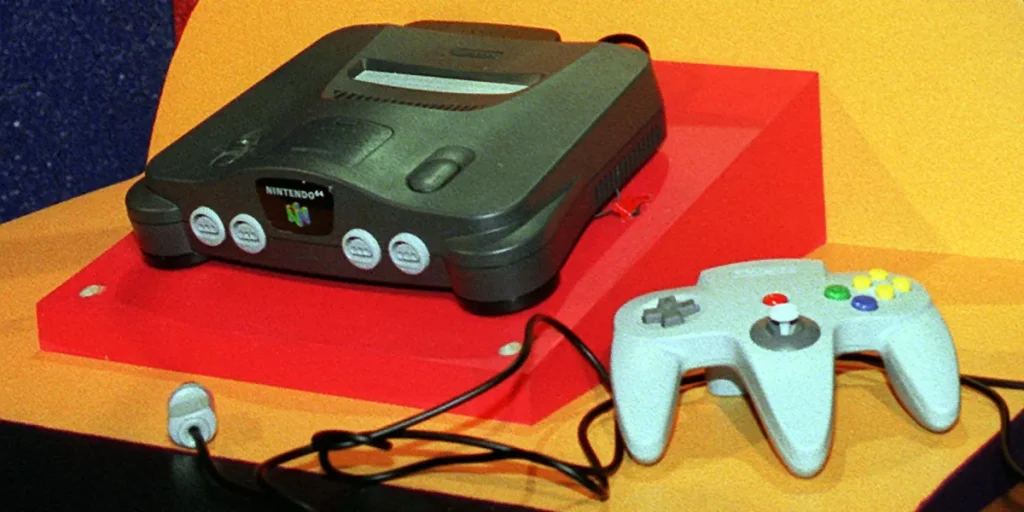
The Nintendo 64 controller looked unusual even at the time. Its three-pronged design confused people at first glance, but it existed for a reason. Nintendo was experimenting with how players interacted with 3D spaces, and the analog stick was the heart of that experiment.
Using that stick for the first time felt revolutionary. Movement became smooth and expressive instead of rigid and binary. Entire genres benefited from that innovation, and the modern controller layout owes a great deal to that single design choice. Even with its odd shape, the controller proved that control schemes could evolve alongside game design.
Hardware Power With a Unique Focus
Nintendo packed the Nintendo 64 with impressive technical features for its time. It could render large 3D environments, handle complex physics, and support advanced lighting effects. The system’s emphasis on raw performance was evident in how fluid many games felt compared to earlier 3D attempts.
At the same time, this power came with constraints. Texture resolution and memory limitations forced developers to make compromises. Some games looked sparse or blurry, but clever art direction often turned those limitations into a distinct visual style that remains recognizable today.
The Cartridge Decision That Defined the Console
Nintendo’s decision to stick with cartridges instead of CDs shaped the Nintendo 64 more than any other choice. Cartridges offered faster load times and durability, which aligned with Nintendo’s focus on seamless gameplay. Popping in a game and instantly playing felt magical at the time.
That advantage came at a cost. Cartridges were expensive to produce and limited in storage. Many third-party developers struggled with those constraints, leading some to abandon the platform entirely. This decision protected Nintendo’s design philosophy but narrowed the system’s library in significant ways.
Third-Party Support and Its Limits
The Nintendo 64 received strong support from certain developers, especially those aligned with Nintendo’s priorities. Studios that valued tight controls and gameplay-driven experiences thrived. Others found the hardware and media format too restrictive for their ambitions.
I’ve always felt this divide when looking at the library. The highs were incredibly high, but the gaps between releases could feel long. Compared to competitors with massive catalogs, the Nintendo 64 felt curated rather than abundant. That curation made each major release feel like an event, but it also meant fewer risks were taken.
Mario’s Defining Moment
Super Mario 64 wasn’t just a launch title, it was a statement. The game redefined how platformers worked in 3D space. Movement, camera control, and level design came together in a way that felt intuitive almost immediately.
Playing it for the first time showed how much thought went into translating a 2D concept into a 3D world. Levels were built around exploration rather than linear progression. That approach influenced countless games that followed, and its design principles are still studied today.
Zelda Grows Up
The Legend of Zelda took a massive step forward on the Nintendo 64. Ocarina of Time introduced systems that became industry standards, from lock-on targeting to context-sensitive actions. The world felt alive in a way few games had managed before.
Majora’s Mask pushed even further, experimenting with time, tone, and emotional weight. That willingness to take creative risks demonstrated the platform’s strength as a space for innovation. These games didn’t just expand a franchise, they redefined what adventure games could be.
Multiplayer Becomes a Living Room Event
Local multiplayer was one of the Nintendo 64’s greatest strengths. Four controller ports built directly into the console sent a clear message. This was a system designed for shared experiences.
Games like GoldenEye 007, Mario Kart 64, and Super Smash Bros. turned living rooms into competitive arenas. Those sessions weren’t just about winning, they were about trash talk, laughter, and memories that lasted long after the console was turned off. That social focus gave the Nintendo 64 a personality that many systems lacked.
Rare’s Golden Era
Rare’s partnership with Nintendo defined much of the Nintendo 64’s identity. The studio delivered hit after hit, blending technical skill with creative ambition. Their games pushed the hardware in ways that felt almost impossible at the time.
Titles like Banjo-Kazooie, Perfect Dark, and Donkey Kong 64 showcased what the system could do in the right hands. These games balanced humor, challenge, and polish. Rare’s output during this era remains one of the strongest arguments in favor of the Nintendo 64’s legacy.
Audio Design and Musical Identity
The Nintendo 64’s audio capabilities were often overlooked, but they played a crucial role in its most memorable games. Limited storage forced composers to focus on strong melodies rather than lengthy tracks. That focus resulted in soundtracks that were catchy, emotional, and instantly recognizable.
From sweeping orchestral themes to playful character motifs, the music carried weight. Sound design added personality to worlds that might otherwise have felt empty. Those audio choices helped define the atmosphere of an entire generation of games.
Visual Style Over Raw Detail
Graphical fidelity on the Nintendo 64 was a mixed bag. Some games struggled with muddy textures and foggy draw distances. Others used stylization and color to mask technical limitations.
I’ve always appreciated how many developers leaned into art direction rather than realism. Characters were expressive, worlds were imaginative, and clarity often mattered more than detail. That choice gave many Nintendo 64 games a timeless look that still holds up better than early attempts at realism.
The Absence of Certain Genres
While the Nintendo 64 excelled at platformers, action games, and multiplayer experiences, it lacked depth in other genres. Role-playing games were especially scarce. The cartridge format made large, story-driven titles difficult to justify.
This absence shaped how the console was perceived. Players who wanted long, narrative-heavy experiences often looked elsewhere. The Nintendo 64 became known for immediacy and fun rather than epic storytelling, which limited its appeal for certain audiences.
Competition and Market Pressure
The Nintendo 64 faced fierce competition during its lifespan. Rivals embraced CD-based media and leaned heavily into cinematic presentation. Marketing targeted older audiences and emphasized quantity as much as quality.
Nintendo remained committed to its vision, even as market trends shifted. That stubbornness protected the brand’s identity but cost it market share. The Nintendo 64 didn’t dominate its generation, but it carved out a distinct and memorable space within it.
Innovation That Shaped the Future
Many ideas introduced or refined on the Nintendo 64 became industry standards. Analog movement, lock-on targeting, four-player local multiplayer, and 3D camera systems all gained traction here. These weren’t experiments that faded away, they became foundations.
Seeing those systems evolve over time highlights how forward-thinking the console really was. Even its failures offered lessons that informed future hardware and software decisions. Innovation wasn’t always comfortable, but it was constant.
Flaws That Are Impossible to Ignore
The Nintendo 64 had real weaknesses. Storage limitations, a smaller library, and a sometimes awkward controller design frustrated players. Certain genres simply never found a foothold.
Acknowledging these flaws doesn’t diminish the console’s achievements. Instead, it paints a more honest picture of what it was and what it wasn’t. The Nintendo 64 was ambitious, imperfect, and unapologetically itself.
Personal Reflections on Its Impact
Thinking about the Nintendo 64 always brings back a sense of discovery. Games felt experimental and bold, even when they stumbled. That willingness to try new things left a strong impression on how I think about creativity in games.
The console rewarded curiosity. Exploring worlds, mastering controls, and uncovering secrets felt deeply satisfying. That emotional connection is a big reason why its games are still talked about with such passion.
Influence on Modern Game Design
Modern developers continue to reference Nintendo 64 titles as touchstones. Level structure, camera systems, and control schemes all trace their roots back to this era. Indie games especially draw inspiration from its balance of simplicity and depth.
That influence proves the console’s lasting relevance. Even as technology advances, the core ideas remain valuable. The Nintendo 64 showed that strong design can outlive hardware limitations.
The Nintendo 64 in Retro Gaming Culture
Today, the Nintendo 64 holds a special place in retro gaming. Its cartridges, controllers, and iconic games are instantly recognizable. Revisiting the system feels like stepping into a moment when the future of gaming was wide open.
Collectors and fans continue to celebrate its library, flaws included. That ongoing interest speaks to the console’s personality. It wasn’t designed to please everyone, and that honesty is part of its charm.
Final Thoughts
The Nintendo 64 stands as one of the most important and polarizing consoles ever released. It introduced groundbreaking ideas that reshaped how games were played and designed. At the same time, its limitations narrowed its scope and sparked endless debate.
Innovation, flaws, and legendary games all coexist in its legacy. That balance is what makes the Nintendo 64 unforgettable. It didn’t just follow the future of gaming, it helped invent it, and its influence is still felt every time a 3D world invites exploration.