
Four controllers plugged into a single console used to feel like a technical miracle. Before online matchmaking and voice chat headsets, multiplayer meant crowding around a television, untangling wires, and arguing over who got the good controller. Multitaps and link cables made that chaos possible, and they remain some of my favorite retro gaming accessories because they turned solitary machines into social hubs.
Retro multiplayer was never just about adding extra players. It was about the physical presence of friends in the same room, the shared tension when a match was close, and the celebration that shook the couch after a last-second win. Multitaps and link cables were the bridges that made those moments happen, and their impact on retro gaming culture is far bigger than their small plastic shells suggest.
The Rise Of The Multitap
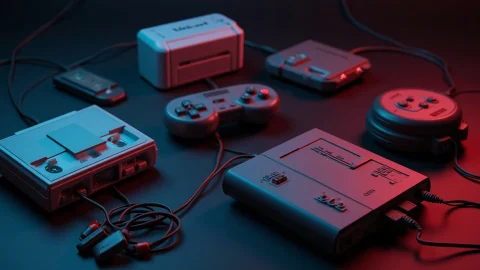
Home consoles were originally designed with one or two controller ports, and that limitation shaped early multiplayer experiences. Two-player modes were common, but anything beyond that required clever engineering. The multitap emerged as a solution, expanding a console’s capabilities without changing the hardware inside.
The Super Nintendo and Sega Genesis both embraced multitaps during the 16-bit era. Suddenly, sports games and party titles could support four players on one system. I still remember the first time I saw five controllers plugged into a SNES via the Super Multitap for Bomberman, and it felt excessive in the best possible way.
What made the multitap special was not just the extra ports but the sense of possibility it created. A living room that could barely fit four people suddenly became an arena. Tournament brackets were scribbled on scrap paper, and rivalries formed over repeated matches that stretched long into the night.
Compatibility And Experimentation
Multitaps were not always simple plug-and-play devices. Some required specific controller ports, and others only worked with certain titles that had explicit software support. Discovering that a game did not recognize the accessory could be frustrating, especially after gathering a full group of friends.
Developers had to program support for extra players, which meant compatibility lists mattered. A game that proudly advertised four-player support on the box immediately grabbed my attention at rental shops. That label promised chaos, laughter, and the kind of tension that only local competition can deliver.
Despite the occasional hiccup, the multitap era showed how flexible retro hardware could be. Engineers and developers found ways to stretch systems beyond their original limitations. That willingness to experiment is one of the reasons I still find retro gaming so compelling.
Party Games And Living Room Tournaments
Certain genres flourished once multitaps became common. Sports games, wrestling titles, and arcade-style shooters benefited tremendously from having more human opponents on screen. The more players involved, the louder the room became.
Bomberman stands out as the ultimate multitap showcase in my collection. Small arenas filled with bombs and power-ups turned into battlefields of betrayal and last-second escapes. The game revealed its true identity only when enough controllers were plugged in and everyone had something to prove.
Those sessions were rarely quiet or polite. Accusations of cheap tactics flew across the couch, and alliances formed only to collapse moments later. The multitap made those dramatic swings possible, and that unpredictability kept us coming back for rematches.
The Nintendo 64 And Built-In Multiplayer
The Nintendo 64 shifted the landscape by including four controller ports directly on the console. That design decision made multiplayer central rather than optional. GoldenEye 007, Mario Kart 64, and Super Smash Bros. became cultural touchstones partly because the hardware invited group play from the start.
Weekends often meant squeezing four people in front of a modest CRT television, each claiming a quadrant of the screen. Screen-peeking became both a strategy and a source of endless arguments. House rules evolved organically, and friendships were tested over close finishes.
Even without a separate multitap accessory, the spirit remained the same. The console felt like a social machine, built to host competitions and cooperative campaigns. It reinforced the idea that gaming could be a shared ritual rather than a solitary pastime.
Handheld Link Cables And Portable Rivalries
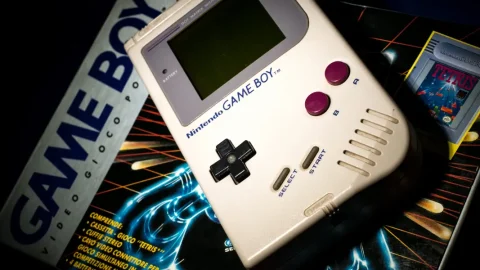
While multitaps dominated living rooms, link cables created a different kind of magic in portable form. The Game Boy link cable connected two systems directly, allowing head-to-head competition without a television. That simple cord carried enormous emotional weight.
Pokémon battles defined the link cable era for many players, including me. Trading creatures and challenging friends required physical proximity and patience. The ritual of connecting cables and waiting for the systems to sync built anticipation that modern wireless connections rarely replicate.
Trading, Battling, And Bragging Rights
Link cables did more than enable combat. They allowed item transfers, cooperative modes, and progress sharing in certain titles. The physical act of handing someone your Game Boy and linking systems felt like a handshake agreement before the match began.
Victories felt personal because your opponent was right there reacting in real time. You could see their frustration, excitement, or disbelief without the filter of a headset. That immediacy strengthened friendships and rivalries alike.
The cable itself often became worn from repeated use. Tangled cords and slightly loose connections were common, but that wear felt like proof of countless battles fought. The accessory turned portable gaming into a shared experience rather than an isolated one.
LAN Setups And System Linking On Consoles
Link cables were not limited to handhelds. Some home consoles supported system linking, allowing multiple machines to connect for expanded multiplayer sessions. The original Xbox, for example, popularized LAN parties that required multiple consoles, televisions, and a web of cables.
Hauling equipment to a friend’s house for a Halo session felt like preparing for a tournament. Consoles were stacked carefully, ethernet cables stretched across rooms, and teams were assigned before the first match even loaded. The technical setup was part of the excitement.
These linked sessions blurred the line between local and networked play. Everyone was physically present, yet the scale felt larger than a single screen could provide. It was a stepping stone between couch co-op and the fully online ecosystems that followed.
The Social Energy Of Shared Screens
Couch co-op thrives on proximity. The ability to nudge a friend after a mistake or celebrate with a high five adds layers to the experience that online play cannot replicate. Multitaps and link cables anchored that energy in hardware form.
Shared screens forced compromise and adaptation. Split-screen modes reduced visibility, yet they encouraged awareness and spatial reasoning. Players learned to interpret peripheral motion and anticipate opponents’ moves even with limited information.
The room itself became part of the game. Commentary, laughter, and even friendly trash talk added texture to each session. Those elements cannot be packaged in a cartridge or downloaded, but the accessories made them possible.
Hardware Quirks And Maintenance
Multitaps and link cables were not immune to wear and tear. Ports could loosen over time, and connectors sometimes required careful positioning to maintain a stable connection. Troubleshooting became part of the ritual before a big session.
Cleaning contacts and checking cables for frays felt like preparing equipment before a match. A faulty accessory could derail an evening’s plans, so I learned to test everything in advance. That practical awareness deepened my appreciation for the hardware.
Replacement accessories are still available in today’s retro market, but original units carry a certain authenticity. Using the same multitap model that friends crowded around decades ago adds a layer of nostalgia that reproductions struggle to match.
Modern Reflections On Retro Multiplayer
Online gaming offers convenience and global competition, yet it often lacks the immediacy of couch co-op. Multitaps and link cables remind me that limitations can inspire creativity. Developers designed games specifically for shared spaces, and players adapted their habits accordingly.
Retro multiplayer feels deliberate. You have to invite people over, gather controllers, and physically connect everything. That effort transforms a casual match into an event worth remembering.
Revisiting these accessories today highlights how much gaming culture has evolved. At the same time, it reinforces how powerful simple connections can be. A handful of cables and extra ports were enough to create memories that still surface years later.
Why Couch Co-Op Still Matters
Local multiplayer fosters communication in ways that online systems often cannot. Eye contact, body language, and spontaneous reactions shape each match. Multitaps and link cables were tools that enabled those interactions, but the magic came from the people holding the controllers.
Retro setups encourage shared discovery. Figuring out strategies together, reacting to unexpected outcomes, and laughing at chaotic glitches all happen in real time. Those shared experiences strengthen bonds beyond the game itself.
Couch co-op remains relevant because it prioritizes presence. The hardware may be dated, and the graphics may be pixelated, but the human connection feels immediate and genuine. Multitaps and link cables stand as symbols of that era, small devices that unlocked enormous potential.
Final Thoughts
Multitaps, link cables, and system link setups transformed retro consoles into communal machines. They expanded player counts, fueled rivalries, and turned ordinary evenings into memorable events. The cables and adapters might seem minor compared to the consoles themselves, yet they shaped how entire generations experienced games.
I continue to value these accessories not just for their functionality but for the atmosphere they create. Plugging in extra controllers or snapping a link cable into place feels like preparing for something special. Retro multiplayer was never only about the game on screen; it was about the people gathered around it, and these humble accessories made that gathering possible.