
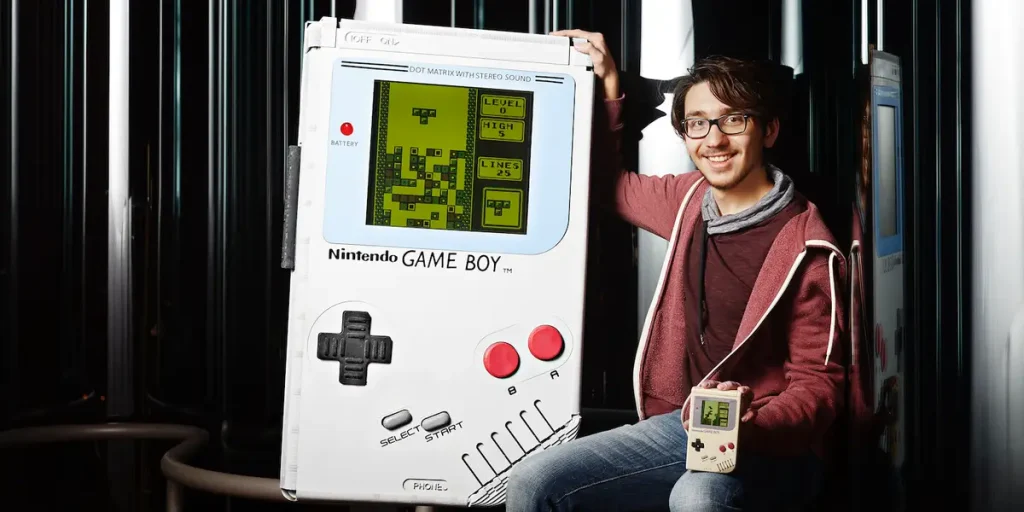
The original Game Boy did not arrive quietly or cautiously. It landed with a chunky gray shell, a greenish screen, and a clear message that gaming no longer belonged only in the living room. From the moment it hit store shelves, it reshaped how and where games could be played, and I still think that shift was more important than any single piece of hardware power. Portable gaming existed before it, but the Game Boy turned portability into a cultural norm rather than a novelty.
What fascinates me most is how little the Game Boy relied on technical flash to win people over. It was underpowered compared to some competitors, yet it felt unstoppable. The system proved that smart design, strong software, and accessibility could outweigh raw specs. That lesson still echoes through gaming today, whether developers admit it or not.
A Console Built on Practical Ideas
Nintendo made deliberate choices with the Game Boy that often get overlooked. The monochrome screen, while limited, consumed far less battery power than color displays of the time. Four AA batteries could last for dozens of hours, which meant long car trips, school breaks, and weekends without constantly begging for replacements. That kind of reliability mattered more to players than sharper visuals ever could.
The physical design also favored durability over elegance. The Game Boy could survive drops, spills, and the general abuse that comes with being stuffed into backpacks and coat pockets. I have seen battered units still function perfectly decades later, and that toughness helped cement trust in the brand. Parents noticed it too, which made the system easier to justify as a purchase.
Games That Fit in Your Pocket and Your Life
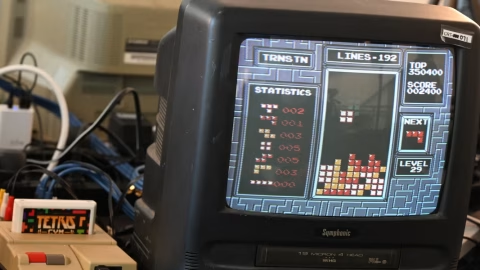
The Game Boy’s library defined what portable games could be. Titles were designed for short bursts, but they also offered depth that rewarded longer sessions. Tetris became the universal example, proving that simple mechanics could hook players of all ages. I have watched people who never considered themselves gamers lose hours to that cartridge without even realizing it.
Role-playing games like Pokémon later expanded that idea even further. Saving progress on the go made epic adventures possible outside the home, and trading via link cables turned playgrounds into social hubs. Those experiences blurred the line between gaming and everyday life. The Game Boy was not just a device; it became part of daily routines.
Portability as a Social Experience
One of the most underrated aspects of the Game Boy era was how social it could be. Link cables encouraged face-to-face interaction in a way online play rarely does. Trading, battling, and competing required players to sit together, talk, and negotiate. That physical connection added a layer of meaning to the games themselves.
I remember how owning certain games instantly made you part of a group. Someone always had an extra cable, and someone else always knew a secret trick. The hardware facilitated these moments without complicated setup or barriers. It was gaming stripped down to its most human form.
Competition and the Power of Restraint
The Game Boy faced serious competition from more technically advanced handhelds. Systems like the Atari Lynx and Sega Game Gear boasted color screens and superior hardware. On paper, they should have won easily. In practice, their short battery life and bulky designs worked against them.
Nintendo’s restraint turned out to be its greatest strength. By focusing on cost, efficiency, and usability, the Game Boy appealed to a much broader audience. It was not trying to impress with specs, but to fit into people’s lives. That philosophy gave it staying power others could not match.
Longevity Beyond Expectations
Few could have predicted how long the Game Boy would dominate the market. It spanned multiple revisions, from the Pocket to the Color, while maintaining backward compatibility. That continuity rewarded loyal players and preserved trust in Nintendo’s ecosystem. Buying games felt like an investment rather than a gamble.
The system’s lifespan also allowed developers to experiment and refine ideas. Genres matured, mechanics evolved, and franchises found their footing. This slow, steady growth contrasted sharply with the rapid obsolescence common in tech. The Game Boy proved that longevity could be a feature, not a flaw.
Redefining What Power Means
The Game Boy challenged the assumption that better graphics automatically meant better games. Its limitations forced developers to focus on gameplay, pacing, and clarity. Without flashy visuals to hide behind, design flaws became obvious, and strong ideas stood out. That environment produced some of the most enduring games ever made.
I often think about how many modern indie developers unknowingly echo this approach. Limited resources encourage creativity, and constraints can inspire smarter solutions. The Game Boy demonstrated that philosophy decades earlier on a massive scale. It helped redefine power as something more nuanced than processing speed.
Cultural Reach Beyond Gaming Circles
The Game Boy reached people who had never owned a console before. Its simplicity made it approachable, and its portability made it visible everywhere. Seeing someone play on a bus or in a waiting room normalized gaming in public spaces. That visibility quietly changed cultural perceptions.
Over time, the device became a symbol rather than just a product. It represented freedom, personal entertainment, and a new relationship with technology. Even those who never owned one recognized its shape and sound. Few gaming systems have achieved that level of cultural penetration.
Influence on Future Handhelds
Every handheld that followed borrowed something from the Game Boy. Battery efficiency, sleep modes, and cartridge-based convenience all trace back to Nintendo’s design choices. Even modern smartphones carry echoes of that philosophy, prioritizing accessibility and instant engagement. The lineage is impossible to ignore.
Nintendo itself continued to build on this foundation with later systems. The Game Boy Advance, DS, and beyond all carried forward the idea that portable gaming should adapt to players, not the other way around. That consistency helped maintain trust across generations. The original Game Boy set the tone for everything that followed.
A Platform for Creative Risks
Because development costs were relatively low, the Game Boy became a playground for experimentation. Smaller studios could take chances without risking massive losses. This environment produced quirky, innovative titles that might never have existed on larger consoles. Some ideas failed, but many succeeded in surprising ways.
Those risks enriched the library and broadened what portable games could be. Puzzle hybrids, unusual RPGs, and genre-bending experiments thrived. I enjoy digging into obscure cartridges and finding concepts that still feel fresh. The Game Boy encouraged creativity by lowering the stakes.
Accessibility Across Generations
The Game Boy crossed age boundaries effortlessly. Children, teenagers, and adults all found something to enjoy. Simple controls and intuitive design made it welcoming to newcomers. At the same time, complex games offered depth for more experienced players.
This broad appeal strengthened gaming as a shared hobby. Families could bond over a single device without feeling excluded. That inclusivity helped gaming grow beyond niche status. The Game Boy quietly paved the way for gaming’s mainstream acceptance.
Sound Design and Memory
The Game Boy’s audio capabilities were limited, yet unforgettable. Simple chiptune melodies lodged themselves into memory with surprising force. Developers learned how to maximize those sounds, creating music that remains instantly recognizable. Even today, a few notes can trigger vivid memories.
Sound effects also played a crucial role in feedback and immersion. Each beep and bloop served a purpose, reinforcing actions and outcomes. The clarity of audio design compensated for visual simplicity. It showed how thoughtful sound could elevate an experience.
Durability of Nostalgia and Hardware
Nostalgia surrounding the Game Boy is not just emotional; it is physical. Many units still function decades later with minimal maintenance. That durability reinforces positive memories and keeps the system relevant. Collectors and casual fans alike continue to revisit it.
This persistence allows new generations to experience the hardware directly rather than through emulation alone. Holding the device connects players to its history in a tangible way. The Game Boy remains a living artifact rather than a forgotten relic.
Lessons the Industry Still Learns From
The success of the Game Boy continues to teach valuable lessons. Accessibility, battery life, and thoughtful design matter more than chasing trends. Players value experiences that fit naturally into their lives. These principles remain relevant even as technology evolves.
I often see modern devices struggle with these basics despite incredible power. The Game Boy’s legacy serves as a reminder that progress is not always about doing more. Sometimes it is about doing enough, consistently and well.
Why Its Impact Still Matters Today
Portable gaming is now ubiquitous, but its roots trace back clearly to the Game Boy. The idea that games can travel with us feels obvious now, yet it was revolutionary at the time. That shift changed expectations permanently. Gaming became personal in a way it had never been before.
The Game Boy’s impact lives on in design philosophy, cultural acceptance, and shared memories. It proved that limitations could be strengths and that simplicity could scale globally. For all its modest hardware, it carried a massive influence. That influence continues to shape how and why we play.
A Legend That Earned Its Place
Looking back, the Game Boy stands as more than a successful product. It represents a turning point where gaming expanded beyond fixed spaces and rigid schedules. It respected players’ time, habits, and environments. That respect fostered loyalty and love that still endure.
I consider the Game Boy a legend not because it was perfect, but because it was purposeful. Every choice supported a clear vision of portable play. That clarity allowed it to change gaming forever. Few devices can claim such a lasting and meaningful legacy.