
The Dreamcast arrived with confidence, ambition, and a sense of urgency that was impossible to ignore. Sega was coming off a rough period, and this console felt like a statement that the company still knew how to innovate. From the moment it hit the market, it was clear that this was not just another incremental upgrade. It was a bold attempt to push gaming forward faster than the rest of the industry was prepared for.
I have always felt that the Dreamcast represents one of the most fascinating “what if” moments in gaming history. It delivered ideas that would later become standard, yet it introduced them too early and without the support needed to survive long term. Despite its short lifespan, the console left a mark that still feels surprisingly modern. That contradiction is exactly why it continues to matter.
Sega’s Last Stand and a Fresh Start
By the late 1990s, Sega was in a difficult position. The Sega Saturn struggled outside Japan, and consumer confidence in the brand had taken a hit. The Dreamcast was designed as a clean break from past missteps, both technically and philosophically. Sega wanted something powerful, developer-friendly, and easy to market.
The result was a console that felt refreshingly focused. Its architecture was simpler than many competitors, making it easier to develop for. This decision paid off immediately with a strong lineup of launch titles. Sega was clearly trying to rebuild trust by putting games first, and that intent showed in nearly every aspect of the system.
A Design That Felt Different
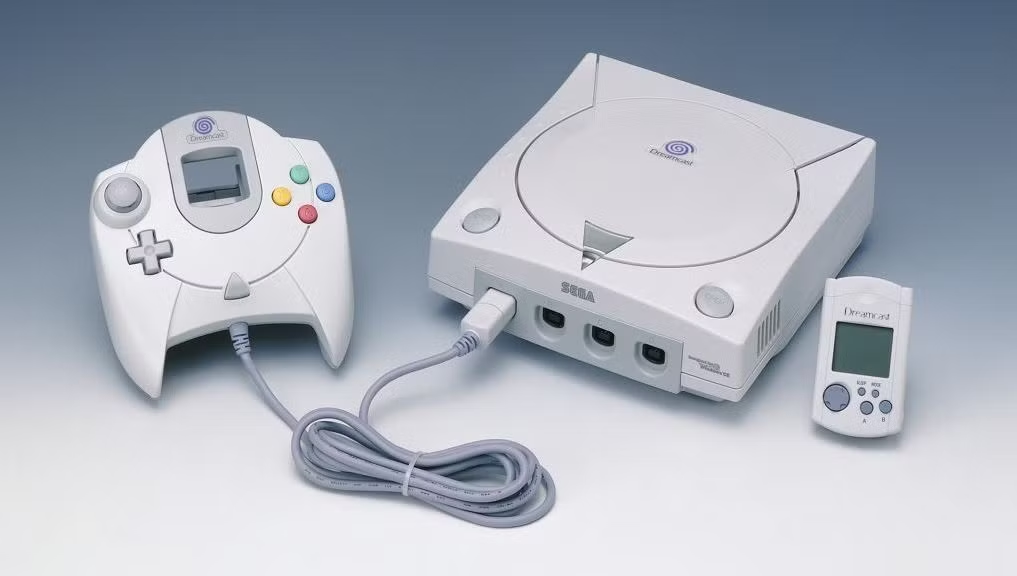
The Dreamcast’s physical design stood out without trying too hard. Its compact white shell, circular lid, and minimalistic look felt almost futuristic compared to darker, bulkier consoles of the era. It looked like something designed for a new millennium, which matched Sega’s messaging perfectly. Even the startup sound contributed to that sense of optimism.
The controller was more divisive, but it was undeniably forward-thinking. The analog stick felt great for 3D movement, and the triggers were ahead of their time. While the controller shape had flaws, it introduced ideas that would influence later designs. It felt experimental in a way that matched the console’s overall identity.
The VMU Was More Than a Memory Card
The Visual Memory Unit remains one of the Dreamcast’s most unique features. At a glance, it looked like an ordinary memory card, but it offered far more. The small screen and buttons allowed it to function as a secondary display, a mini-game system, and a way to extend gameplay beyond the TV. That idea still feels inventive today.
Some games used the VMU brilliantly, showing health bars, maps, or secret information. Others let players take their characters on the go. While not every title supported it meaningfully, the concept itself was years ahead of its time. Modern second-screen features owe more to the VMU than they often get credit for.
Online Gaming Before It Was Normal
Perhaps the Dreamcast’s most revolutionary feature was its built-in modem. Online console gaming existed before, but Sega made it a standard feature rather than an expensive add-on. This decision lowered the barrier to entry and encouraged developers to experiment with online play. At the time, this felt almost unreal.
Games like Phantasy Star Online showed what connected console gaming could become. Cooperative play with strangers across the world was no longer a distant concept. The infrastructure was limited and the internet itself was still evolving, but the vision was clear. The Dreamcast treated online connectivity as a core part of gaming’s future.
Arcade Perfection at Home
Sega’s arcade heritage shined brightly on the Dreamcast. The console was capable of delivering arcade-accurate experiences that felt unmatched at the time. Fighters, racers, and action games all benefited from this strength. It felt like Sega was bringing the arcade home in a way that finally felt complete.
Titles like Crazy Taxi, Soulcalibur, and Daytona USA captured speed and responsiveness beautifully. These games were not just good ports; they were definitive versions. The Dreamcast excelled at delivering immediate, high-energy fun. That focus helped it build a passionate fanbase quickly.
A Library Full of Creative Risks
One of the Dreamcast’s greatest strengths was its willingness to take risks. Sega and third-party developers experimented with unusual concepts and genres. Games like Shenmue attempted ambitious storytelling and world-building rarely seen at the time. While not every experiment succeeded, the creativity was undeniable.
This openness made the library feel diverse and exciting. Players never quite knew what was coming next. That unpredictability gave the Dreamcast a unique identity. It felt like a platform where ideas mattered more than market research.
Shenmue and the Cost of Ambition
Shenmue deserves special attention because it perfectly represents both the Dreamcast’s brilliance and its problems. The game aimed to create a living, breathing world with daily routines, detailed environments, and cinematic storytelling. Nothing else felt quite like it at the time. Playing it felt like stepping into the future of interactive storytelling.
At the same time, its massive budget placed enormous strain on Sega. The game’s sales could not justify its cost, despite its critical acclaim. Shenmue became a symbol of ambition outpacing commercial reality. It showed what the Dreamcast could do, but also highlighted the risks Sega was willing to take.
Piracy and Its Unintended Consequences
The Dreamcast’s security was famously easy to bypass. While this made the console popular among hobbyists and experimenters, it also hurt software sales. Developers became wary of investing in a platform where piracy was so accessible. Over time, this damaged third-party support.
This vulnerability was not the sole reason for the console’s decline, but it certainly did not help. Sega struggled to maintain momentum as fewer big publishers committed to the system. The openness that made the Dreamcast exciting also made it fragile. It was another example of being ahead of the industry’s readiness.
Competition and Market Timing
The Dreamcast launched before the PlayStation 2, which initially gave it a head start. However, Sony’s marketing power and the promise of DVD playback shifted consumer attention quickly. Many players chose to wait, assuming the PS2 would be the safer long-term investment. That hesitation proved costly for Sega.
Timing played a crucial role in the Dreamcast’s fate. Its ideas would have thrived in a slightly later market, one more prepared for online play and experimental design. Instead, it found itself squeezed between expectations and reality. Being first is not always the same as being successful.
The End of Sega as a Hardware Maker
Sega’s decision to discontinue the Dreamcast marked the end of an era. It was a painful moment for fans and for the industry as a whole. Sega shifted to software development, bringing its creativity to other platforms. While this move ensured the company’s survival, it also closed the door on future Sega consoles.
I still think about what Sega might have accomplished if circumstances were different. The Dreamcast showed that the company still had vision and talent. Losing that hardware perspective changed the gaming landscape. The industry became safer, but arguably less adventurous.
A Legacy That Refuses to Fade
Despite its commercial failure, the Dreamcast’s legacy continues to grow. Fans keep the system alive through homebrew development, tournaments, and online communities. New games still appear, long after official support ended. That level of dedication speaks volumes.
Many of the Dreamcast’s ideas live on through other platforms. Online gaming, indie experimentation, and arcade-style experiences are now standard. The console’s influence is easier to see with hindsight. It was not wrong; it was simply early.
Why the Dreamcast Still Matters
The Dreamcast matters because it reminds us that innovation is risky but necessary. It challenged assumptions about what consoles could do and how players could connect. Even in failure, it pushed the industry forward. That contribution should not be underestimated.
I view the Dreamcast as a console that dared to believe in a different future. Its ideas outlived its lifespan, shaping gaming in subtle but meaningful ways. While it never got the success it deserved, its spirit remains alive. That is why the Dreamcast will always feel ahead of its time.