
Failure in the console world is often treated as a punchline. Sales numbers get thrown around, memes take over, and entire systems are reduced to a single bad decision or awkward launch. That attitude has always felt incomplete to me, because commercial failure rarely tells the whole story of what a console actually tried to do.
Some of the most interesting ideas in gaming history came from machines that did not survive their generation. They pushed boundaries, challenged expectations, or arrived too early for the market to catch up. Looking back at them now, it is hard not to feel a sense of admiration for the risks they took, even when those risks did not pay off.
What Failure Really Means in Console History
A failed console is usually defined by poor sales, limited software support, or short market lifespan. That definition is convenient, but it ignores context. Market timing, competition, pricing, and consumer expectations all play massive roles.
I have come to see failure as a snapshot rather than a verdict. Many consoles failed not because they were bad, but because they were misunderstood or mismanaged. Evaluating them today requires separating the hardware and ideas from the business decisions surrounding them.
Atari Jaguar and Ambition Without Focus
The Atari Jaguar aimed to reclaim Atari’s former glory by branding itself as a 64-bit system. On paper, that ambition was impressive. In practice, the console suffered from confusing architecture and limited developer support.
Despite its problems, the Jaguar deserves respect for trying to leap ahead technologically. It attempted to compete with giants using bold marketing and raw power. While execution fell short, the intent behind it was far from lazy or cynical.
Sega 32X and the Cost of Fragmentation
The Sega 32X exists as a symbol of internal conflict rather than incompetence. Designed as an add-on to extend the life of the Genesis, it arrived just as Sega was preparing its next-generation hardware. That timing split consumer trust and developer attention.
What still earns my respect is the technical creativity behind it. The 32X showed what could be achieved with limited resources and clever engineering. Its failure feels less like a mistake and more like collateral damage from corporate confusion.
Sega Saturn and the Burden of Complexity
The Sega Saturn failed in many regions, but not because it lacked power or vision. Its downfall came from an overly complex design that made development difficult. Programming for it required specialized knowledge and patience.
When developers mastered the hardware, the results were stunning. Arcade-perfect ports and visually rich games proved the Saturn’s potential. Its failure highlights how technical ambition without accessibility can limit success.
Neo Geo AES and the Price of Excellence
The Neo Geo AES was never meant for mass-market success. It delivered arcade-quality experiences at home, but at a price that excluded most consumers. Cartridges cost as much as entire consoles.
Calling it a failure ignores its purpose. The Neo Geo succeeded in delivering uncompromised quality to a niche audience. Its legacy lives on as a symbol of premium gaming before the concept became mainstream.
Atari Lynx and Portable Power Too Soon
The Atari Lynx was technologically ahead of its time. It offered a color screen, backlighting, and powerful hardware years before competitors caught up. Unfortunately, it also drained batteries at an alarming rate.
That flaw overshadowed its achievements. The Lynx demonstrated what portable gaming could become, even if the infrastructure was not ready. Its failure feels like a timing issue rather than a design failure.
Sega Dreamcast and the Weight of Expectations
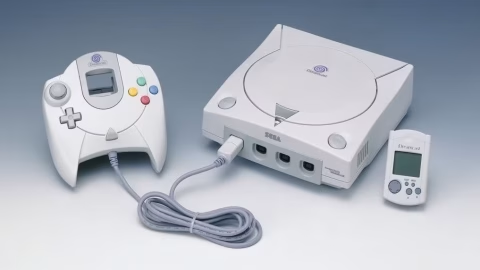
The Dreamcast’s failure still stings because of how much it got right. Online functionality, innovative controllers, and a strong launch lineup positioned it as a forward-thinking system. It arrived with confidence and clarity.
What undermined it was Sega’s damaged reputation and looming competition. The Dreamcast deserved a longer life than it received. Its influence can be seen in countless modern features that later became standard.
Virtual Boy and the Cost of Experimentation
Nintendo’s Virtual Boy is often mocked for its visuals and discomfort. The red-and-black display and awkward design made extended play difficult. It failed quickly and publicly.
Yet I cannot ignore the courage behind it. Nintendo experimented with immersive 3D long before the technology matured. The Virtual Boy stands as a reminder that innovation often involves uncomfortable failures.
Philips CD-i and the Identity Crisis
The Philips CD-i struggled because it never clearly defined itself as a gaming console. It was marketed as a multimedia device during a time when consumers were unsure what that meant. Games felt secondary to its broader ambitions.
Despite that, the CD-i experimented with interactive media in ways that influenced future formats. Its failure lies in focus, not creativity. It tried to do too much before the audience was ready.
Apple Pippin and the Price of Exclusivity
The Apple Pippin entered the market with high expectations and an even higher price. It aimed to merge computing and gaming under a recognizable brand. That vision was ambitious but poorly executed.
Limited software and expensive hardware sealed its fate. Still, the Pippin represented an early attempt at convergence. Concepts it explored later became common in other ecosystems.
Ouya and the Challenge of Indie Consoles
The Ouya promised a revolution in indie gaming through open development and affordable hardware. Initial excitement quickly faded as quality control issues and weak support emerged. The idea outpaced the execution.
What deserves respect is its challenge to traditional console models. Ouya questioned exclusivity and gatekeeping. Even in failure, it contributed to broader conversations about accessibility in game development.
Gizmondo and Misplaced Priorities
The Gizmondo is remembered for its bizarre marketing and legal troubles. Its hardware showed promise, but mismanagement overshadowed everything else. The console never had a fair chance to mature.
Looking past the headlines, the Gizmondo attempted to integrate GPS and multimedia features ahead of its time. Poor leadership sank it, not a lack of ideas. It remains a cautionary tale rather than a joke.
Why These Consoles Still Matter
Failed consoles often introduce ideas that succeed elsewhere. Features dismissed at launch later become industry standards. Failure does not erase innovation.
I see these systems as stepping stones rather than dead ends. They represent experimentation that shaped future successes. Ignoring them means missing important chapters in gaming history.
How Failure Fuels Innovation
The industry learns more from failures than from safe successes. Consoles that stumble expose weaknesses in design, marketing, or timing. Those lessons influence the next generation.
Respecting failed consoles means acknowledging their role in progress. They took risks that others learned from. That courage deserves recognition.
The Collector’s Perspective on Failed Consoles
From a collector’s standpoint, failed consoles offer unique value. Their libraries often contain experimental titles and unconventional designs. Owning them feels like preserving overlooked history.
These systems also encourage deeper appreciation. Playing them requires patience and curiosity. That effort often leads to a stronger connection than more polished platforms.
Rethinking Success and Failure
Success in gaming is often reduced to numbers. That metric ignores cultural impact and long-term influence. Some consoles fail loudly but echo for decades.
I have learned to judge consoles by what they attempted, not just what they sold. Failure does not negate ambition. Sometimes it highlights it.
Final Thoughts
Consoles that failed still deserve respect because they dared to be different. They challenged norms, explored new ideas, and accepted risk in an industry that often rewards caution. Without them, gaming would be narrower and less imaginative.
Looking back, these systems feel less like mistakes and more like experiments. Some experiments fail, but all of them teach. For me, that makes these consoles worthy of attention, preservation, and respect.