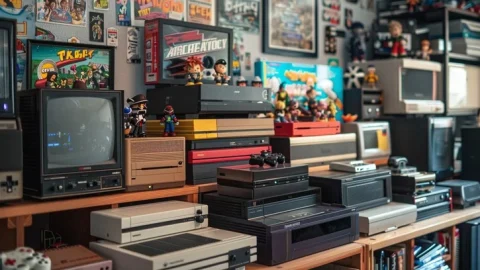

Sliding a cartridge into a console used to feel like a small ritual. I would press it down firmly, flip the power switch, and wait for that familiar click and hum as the screen flickered to life. That moment carried a sense of certainty. The game I was about to play was complete, self-contained, and entirely dependent on my patience and skill. Today, booting up a modern title feels different, and not just because of faster hardware or sharper graphics. The entire culture and rhythm of playing have shifted in ways that still surprise me.
Looking back, I see that the difference between playing then and playing now goes far beyond nostalgia. It is about attention, difficulty, community, access, and even the meaning of ownership. My relationship with games has evolved alongside the industry, and in that evolution I can trace how gaming itself has matured, expanded, and sometimes complicated what used to feel beautifully simple.
The Pace of Play
Older games demanded a slower, more deliberate pace, even when they were fast on screen. I would sit on the floor inches from a CRT television, fully locked in, because there were no notifications pulling me away. The world outside the game faded, and my entire focus narrowed to timing a jump or memorizing an enemy pattern. Distraction was limited to the occasional sibling walking through the room.
Today, I often catch myself glancing at my phone during a loading screen or pausing a game to check a message. Modern life runs on constant alerts, and that urgency bleeds into gaming. Even single-player experiences compete with social feeds, streaming platforms, and endless digital noise. The pace of play feels faster, but attention feels more fragmented.
Back then, I committed to a session. I knew that if I turned the console off, I might lose progress. That risk created intensity. Now, with autosaves, cloud backups, and quick resume features, the pressure is lighter. Convenience has improved the experience in many ways, yet it has also softened that edge that once made every session feel precious.
Difficulty and Patience
Difficulty defined many classic games. I remember repeating the same level dozens of times, slowly internalizing patterns until muscle memory took over. Failure was expected. In fact, it was the primary teacher. There were no difficulty sliders in most cases, and certainly no patch arriving later to smooth out rough edges.
Modern games often offer multiple modes tailored to different skill levels. Accessibility features allow more players to experience stories without frustration, and I genuinely appreciate that inclusivity. At the same time, I notice how rare it is for a game today to demand the kind of raw persistence that older titles required by default.
Back then, beating a game felt like earning a badge. It was not just about reaching the end credits but about surviving a gauntlet designed to test reflexes and resolve. Now, progression systems, checkpoints, and tutorials gently guide players forward. The journey remains rewarding, but the nature of the challenge has changed from endurance to engagement.
Ownership and Permanence
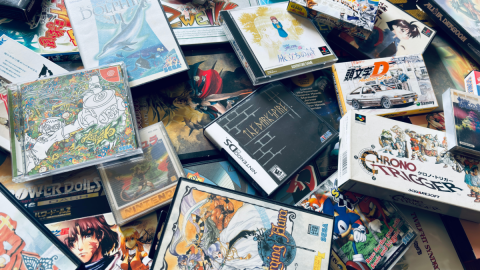
Owning a game cartridge or disc used to feel tangible and permanent. I could hold it, trade it, lend it to a friend, or rediscover it years later in a dusty box. The game existed as a physical object that anchored my memories. That sense of possession added weight to the experience.
Today, much of my library exists as digital licenses. I scroll through menus of icons rather than stacks of cases. It is convenient, efficient, and undeniably practical. Yet I sometimes feel a subtle detachment, knowing that access depends on servers, accounts, and policies beyond my control.
Older games were frozen in time. Once released, they rarely changed. Bugs remained, secrets persisted, and speedrunners built strategies around fixed code. Modern games evolve after launch through patches and updates. While that flexibility can improve balance and fix problems, it also means the version I play today may not be the same one I revisit years later.
Social Spaces and Community
Multiplayer once meant gathering in the same physical space. Friends would crowd around a single television, controllers tangled together, arguing over whose turn was next. That local energy created a shared atmosphere that felt immediate and personal. Trash talk was face-to-face, and victories were celebrated in real time.
Online gaming has transformed community into something vast and borderless. I can connect with players across continents within seconds. Cooperative raids and competitive matches bring together people who would never otherwise meet. The scale is astonishing, and I value the diversity of interactions.
Yet I miss the intimacy of couch multiplayer. Modern voice chat can be lively, but it often lacks the warmth of shared physical presence. Playing then meant sharing snacks, glancing at each other’s screens, and reacting together. Playing now often means wearing a headset in a quiet room, connected yet physically alone.
Discovery and Mystery
Finding secrets in older games felt like uncovering hidden treasure. Rumors spread through schoolyards and magazines, and I would test them one by one, unsure what was real. Without instant online guides, discovery relied on experimentation and word of mouth. The sense of mystery was powerful because information traveled slowly.
Now, solutions are a search away. If I get stuck, I can watch a complete walkthrough within minutes. That accessibility saves time and prevents frustration, but it also reduces the thrill of personal discovery. The unknown rarely stays unknown for long in the age of instant information.
Back then, even simple mechanics could feel magical because they were unexplained. I remember stumbling upon hidden levels or secret characters and feeling like I had unlocked something meant only for me. Today, data miners often reveal content before release. The curtain has been pulled back, and the sense of collective wonder feels thinner.
Technology and Immersion
The technical leap from pixelated sprites to photorealistic worlds is undeniable. Modern games render expansive landscapes with dynamic lighting and lifelike animations. Immersion has reached cinematic levels, and I often find myself pausing just to admire the detail in a digital sunset.
Older graphics were limited, yet they sparked imagination in ways that high fidelity sometimes does not. A few pixels could represent a hero, and my mind filled in the rest. That collaboration between game and imagination created a unique intimacy. The constraints forced developers to focus on strong design and memorable mechanics.
Playing then meant accepting visual abstraction as part of the charm. Playing now means navigating worlds that aim to mirror reality. Both forms of immersion have value, but they engage different parts of the mind. One leans on imagination, the other on spectacle.
Time Commitment and Game Length
Many classic games were short by modern standards, yet they felt expansive because of difficulty. Repetition extended playtime, and mastering levels became the core experience. I could finish some titles in a few hours if I played perfectly, but achieving that perfection took weeks.
Modern games often stretch across dozens or even hundreds of hours. Open worlds, side quests, and downloadable expansions promise endless content. While that abundance can be satisfying, it can also feel overwhelming. I sometimes hesitate to start a new game because I know the commitment will be massive.
Back then, a smaller library meant deeper familiarity with each title. I would replay the same game repeatedly, exploring all its secrets. Now, digital storefronts offer constant new releases. The paradox of choice can dilute focus, making it harder to form the same long-term bond with a single game.
Monetization and Design Philosophy
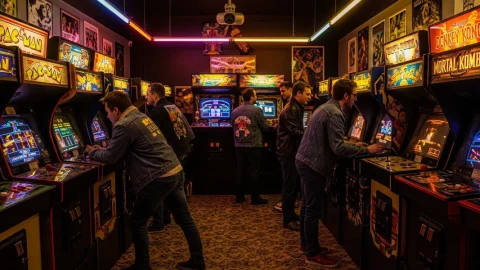
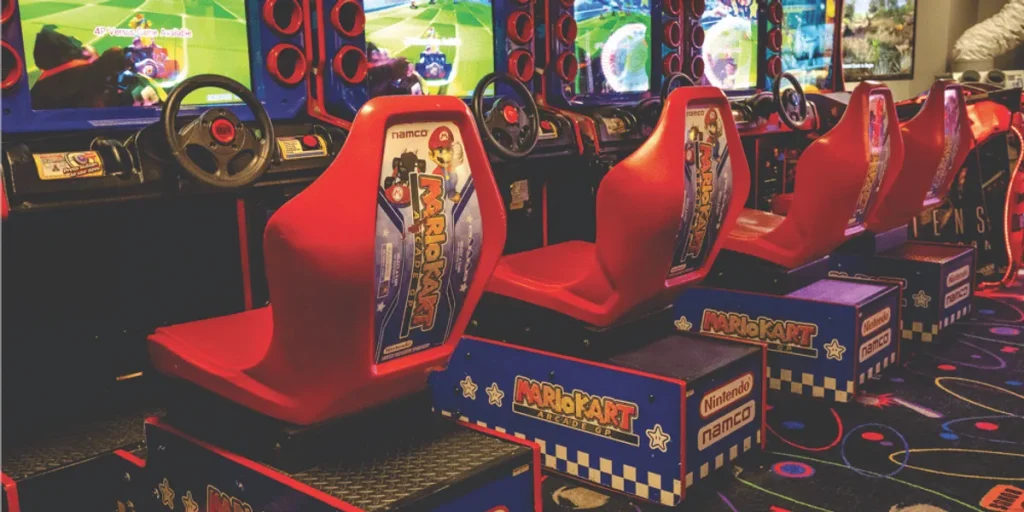
Arcade roots and early console eras revolved around straightforward transactions. You bought the game, and that was it. The entire experience was packaged in that purchase. Design decisions aimed to challenge or entertain, not to extend revenue streams.
Modern gaming includes battle passes, cosmetic purchases, expansions, and live service models. Some of these systems are optional and harmless, but others shape gameplay loops in subtle ways. I sometimes sense that progression systems are tuned to encourage engagement metrics rather than pure enjoyment.
Playing then felt like stepping into a complete artistic statement. Playing now can feel like entering an evolving platform designed for longevity. That shift reflects changes in business models as much as in technology. It also alters how I interpret in-game rewards and progression.
The Emotional Texture of Memory
Memory softens edges and adds warmth. I cannot deny that part of the difference between playing then and playing now lives inside me rather than inside the games. Childhood carried fewer responsibilities, and free time felt endless. Games became entire universes because I had the space to inhabit them fully.
Adulthood changes that equation. Responsibilities fragment attention, and gaming sessions fit into tighter schedules. Even the most immersive modern title competes with work, family, and obligations. The emotional texture of play inevitably shifts as life evolves.
Still, certain feelings persist. The surge of adrenaline during a difficult boss fight, the quiet satisfaction of solving a puzzle, and the joy of sharing a favorite game with a friend remain constant. Technology has advanced, but the core emotional responses continue to bridge past and present.
Accessibility and Inclusivity
Older games often assumed a narrow audience. Difficulty spikes, limited representation, and minimal tutorials created barriers. I loved many of those titles, yet I recognize that they did not always welcome everyone.
Modern developers place greater emphasis on accessibility options and diverse storytelling. Adjustable controls, visual aids, and narrative-driven experiences broaden who can participate. That shift represents genuine progress. More people can see themselves reflected in the worlds they explore.
Playing now means witnessing an industry that has grown more inclusive and self-aware. Playing then meant navigating a landscape shaped by fewer voices and fewer perspectives. The difference is not just technological but cultural.
The Ritual Versus the Platform
Starting an older game involved a physical routine. I would clear space near the console, connect cables, and sometimes blow dust from a cartridge in a misguided attempt to fix glitches. That tactile process framed the experience as deliberate and intentional.
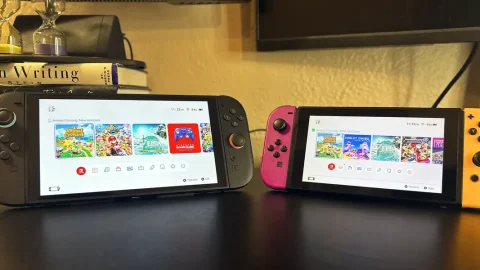
Modern platforms consolidate hundreds of games into a single device. Switching between titles takes seconds. Convenience is unmatched, but the ritual has faded. I rarely pause to appreciate the act of starting a game because it blends seamlessly into daily digital life.
That ritual once created anticipation. I felt like I was entering a distinct space reserved for play. Now, gaming sits alongside streaming, browsing, and messaging on the same hardware. The boundary between play and everything else has blurred.
Final Thoughts
The difference between playing then and playing now is not a simple matter of better or worse. It is a story of transformation shaped by technology, culture, and personal growth. I cherish the raw challenge, mystery, and intimacy of older games, yet I also value the accessibility, scope, and global connectivity of modern ones.
Both eras have given me unforgettable experiences. The crackle of a CRT screen and the glow of a high-definition display each mark chapters of the same ongoing journey. Gaming has evolved, and so have I. In that shared evolution, I find not a loss, but a layered history that continues to redefine what it means to pick up a controller and play.