
Retro gaming has a way of turning almost any old piece of plastic into a legend. Time softens flaws and amplifies nostalgia, and suddenly accessories that once gathered dust on store shelves are treated like essential artifacts. Not all of them deserve that elevated status.
I enjoy collecting unusual hardware, but I also think it is healthy to admit when something was more hype than substance. Some accessories promised revolutionary gameplay and delivered frustration instead. Others were technically impressive yet impractical for everyday use.
Looking back with a clearer lens does not diminish retro gaming’s magic. It simply separates genuinely transformative hardware from gadgets that rode a wave of marketing and memory.
The Power Glove Fantasy
The Power Glove often tops lists of iconic retro accessories. Its futuristic design and pop culture appearances turned it into a symbol of late-80s gaming ambition. Slip it on, and it felt like stepping into a cyberpunk fantasy.
In practice, it rarely lived up to its promise. Calibration was awkward, motion detection felt inconsistent, and only a handful of games supported it meaningfully. Attempting precise platforming with it quickly became an exercise in patience.
The myth of the Power Glove sometimes overshadows its functionality. It remains visually striking and culturally significant, but as a practical controller, it was more novelty than revolution.
Arcade Sticks That Looked Better Than They Played
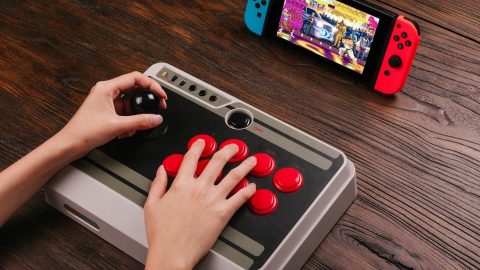
Arcade sticks carry an aura of authenticity. The idea of bringing arcade precision home appeals to competitive instincts and nostalgic memories. A large joystick and oversized buttons can make any fighting game feel more serious.
However, not all arcade sticks were created equal. Budget versions often featured stiff joysticks, unresponsive buttons, and lightweight builds that slid across tables mid-match. The promise of arcade realism evaporated quickly under those conditions.
High-quality sticks absolutely deserve praise, but the market was flooded with mediocre options riding the arcade aesthetic. Owning one did not automatically elevate gameplay.
Light Guns On Modern Displays
Light guns once felt magical, especially on CRT televisions. Pointing at the screen and firing at pixelated targets created a direct, almost theatrical interaction. On their original displays, they functioned reliably and added energy to multiplayer sessions.
Modern screens changed the equation entirely. Traditional light guns rely on CRT scanning behavior, which flat panels do not replicate. Without specialized solutions, many classic light guns simply do not work today.
Despite this limitation, they are sometimes marketed as must-have retro accessories. In reality, unless paired with proper equipment, they become decorative relics rather than functional tools.
Third-Party Memory Cards
Memory cards for disc-based consoles were essential, but third-party versions varied wildly in quality. Official cards were expensive, which made cheaper alternatives tempting. Marketing often promised expanded storage at a fraction of the price.
Corrupted save files told a different story. I remember losing hours of progress due to unreliable third-party cards that failed without warning. That experience reshaped how I evaluate storage accessories.
The idea of extra capacity sounds appealing, yet dependability matters more. In hindsight, many of those budget memory cards were not worth the risk.
Clip-On Screen Magnifiers
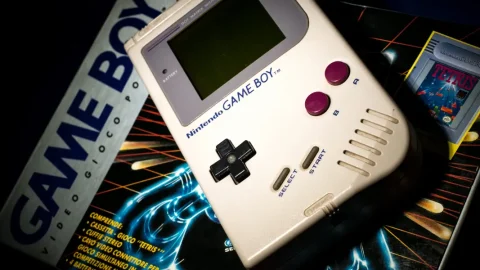
Handheld gaming inspired a wave of magnifier accessories. Plastic lenses clipped onto devices like the original Game Boy to enlarge the screen. Some even included built-in lights to compensate for dim displays.
The concept addressed a real problem, but execution often fell short. Distortion at the edges and awkward viewing angles made extended sessions uncomfortable. Bulky attachments also reduced portability, defeating one of the handheld’s core strengths.
Magnifiers have their place, especially for collectors demonstrating hardware, but they are rarely the ideal solution for everyday play.
Controller Extensions That Added Little Value
Controller extension cables promised freedom of movement in living rooms with limited space. On paper, they solved practical constraints. In reality, they sometimes introduced signal interference or clutter.
Longer cables could also increase the chance of tripping or tangling. Instead of simplifying setups, they occasionally complicated them further.
Wireless solutions have since rendered many extension cables obsolete. Their usefulness today feels limited compared to modern alternatives.
AV Switch Boxes Of Questionable Quality
AV switch boxes were common in households juggling multiple consoles. These devices allowed several systems to connect to a single television input. Convenience was their primary selling point.
Lower-quality switch boxes, however, often degraded image quality. Signal loss, added noise, and loose connections became frequent frustrations. Instead of improving setups, they sometimes introduced new visual issues.
Reliable switch boxes exist, but many budget models fell short of expectations. Their mixed performance contributes to their overrated status.
Decorative Faceplates And Cosmetic Add-Ons
Some accessories focused purely on aesthetics. Decorative faceplates and console skins promised personalization without altering functionality. Bright colors and themed graphics appealed to fans seeking individuality.
Over time, many of these cosmetic additions aged poorly. Adhesive residues, fading designs, and peeling edges detracted from hardware condition. Collectors often prefer untouched consoles over modified ones.
While personalization has its charm, cosmetic add-ons rarely increase long-term value. Their impact feels more fleeting than transformative.
Cheap Steering Wheels For Racing Games
Racing wheels aimed to replicate arcade and simulation experiences at home. Premium models could indeed enhance immersion. Unfortunately, budget versions frequently suffered from limited rotation range and imprecise sensors.
The mismatch between expectation and performance led to disappointment. Steering that felt loose or overly sensitive undermined the illusion of realism.
For serious racing fans, investing in quality hardware makes sense. Many entry-level wheels, however, were more about appearance than performance.
The Hype Around Multitaps
Multitaps expanded multiplayer capacity beyond two players. In theory, they unlocked social gaming potential. Certain titles genuinely benefited from four-player functionality.
In practice, the library of compatible games was often smaller than expected. Some multitaps ended up used only a handful of times before returning to storage.
They are not inherently flawed, but their perceived necessity sometimes exceeds their practical usage. Multiplayer memories remain powerful, yet the accessory itself was not always essential.
Early Motion Control Experiments
Before motion control became mainstream, several retro accessories experimented with tracking physical movement. These devices promised immersive interaction through gestures and body positioning.
Technology limitations frequently hindered accuracy. Latency and calibration issues disrupted gameplay flow. Players often reverted to standard controllers for reliability.
The ambition deserves respect, but performance rarely matched marketing. Motion control would require decades of refinement before achieving widespread success.
Collectibility Versus Functionality
Some accessories gain inflated reputations due to scarcity rather than quality. Limited production runs can create demand regardless of actual utility. Rarity alone does not guarantee meaningful gameplay enhancement.
I have encountered peripherals that command high prices purely because few were made. Their functionality may be average, yet their status as collectibles drives perception.
Separating collectibility from practical value helps maintain realistic expectations. An accessory can be rare without being transformative.
Final Thoughts
Retro gaming accessories occupy a fascinating space between innovation and nostalgia. Some genuinely expanded possibilities and improved experiences. Others leaned heavily on marketing while delivering modest results.
Acknowledging overrated accessories does not diminish the era’s creativity. It simply invites more thoughtful appreciation of what truly enhanced gameplay and what merely looked impressive on store shelves.
Collecting remains deeply personal, and even flawed peripherals can carry sentimental value. Still, recognizing their limitations adds clarity to the broader story of retro gaming’s evolution.