
Retro gaming history is full of strange experiments that never reached mainstream popularity. Beyond the well-known light guns, multitaps, and memory cards lies a shadowy layer of accessories that were produced in limited quantities, sold only in certain regions, or quietly discontinued after brief runs. Tracking them down feels like uncovering lost footnotes in gaming’s physical history.
I have spent years digging through auction listings, old magazines, and collector forums looking for the oddities that slipped past most players. Some of these accessories were ambitious but impractical. Others were clever solutions that simply arrived at the wrong time. All of them tell stories about how companies tried to expand what home consoles could do long before modern ecosystems standardized everything.
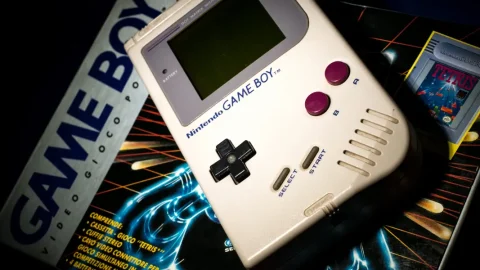
The Nintendo Workboy For Game Boy
The Nintendo Workboy remains one of the most fascinating unreleased accessories ever designed. Built as a keyboard attachment for the original Game Boy, it was meant to transform the handheld into a miniature productivity device. Paired with specialized software, it would have offered word processing, spreadsheets, and even contact management.
Prototypes were produced, but the accessory never saw commercial release. Rising costs and the early 1990s market realities likely doomed it before launch. Holding one of the few surviving units feels surreal, because it represents a path Nintendo considered but abandoned.
The Workboy stands as a reminder that even during the height of cartridge gaming, companies were experimenting with hybrid productivity tools. Long before smartphones merged entertainment and work, someone imagined typing reports on a monochrome Game Boy screen.
The Sega Mega Modem
In Japan, Sega pushed boundaries with the Mega Modem for the Mega Drive. This device allowed players to connect their console to phone lines for online services. It offered downloadable content, leaderboards, and even financial services.
The concept was far ahead of its time. Dial-up connectivity in the early 1990s was slow and expensive, limiting widespread adoption. As a result, the Mega Modem remained a niche accessory that many Western players never encountered.
Examining one today reveals how ambitious Sega was during that era. The idea of downloading content directly to a console predates modern digital storefronts by decades. It was a glimpse of the future wrapped in beige plastic and telephone cables.
The Atari Mindlink
The Atari Mindlink might be one of the strangest controller concepts ever attempted. Designed for the Atari 2600 and 5200, it strapped around the player’s head and translated forehead muscle movements into inputs.
The idea sounded futuristic, almost science fiction in tone. In practice, it reportedly caused discomfort and headaches during testing. The project was canceled before full release, leaving only prototypes behind.
The Mindlink represents a bold attempt to rethink physical interaction with games. While unsuccessful, it demonstrates how companies were willing to experiment far beyond traditional joysticks and pads.
The Nintendo Satellaview
Released exclusively in Japan for the Super Famicom, the Satellaview connected to a satellite broadcast service. Players could download games, magazines, and timed content through scheduled transmissions.
The system required additional hardware and a subscription, making it relatively rare even within Japan. Broadcast-exclusive titles aired at specific times, creating event-style gaming sessions.
Owning a Satellaview unit feels like holding a relic from an alternate timeline. It prefigured digital distribution and live service concepts decades before they became industry norms.
The Sega Activator
The Sega Activator resembled an octagonal ring placed on the floor. It detected movement within its frame and translated physical gestures into in-game actions. Advertisements portrayed players performing martial arts kicks to control fighting games.
In reality, the Activator was notoriously difficult to use effectively. Movements often failed to register accurately, making precise control nearly impossible. What promised immersion frequently delivered frustration.
Despite its flaws, the Activator highlights a desire to merge physical motion with digital gameplay long before motion controls became mainstream. It was ambitious, imperfect, and unforgettable.
The PlayStation Net Yaroze
The Net Yaroze was not a typical consumer accessory. It was a black PlayStation console bundled with development tools that allowed hobbyists to create their own games. Sold in limited quantities, it targeted aspiring developers rather than casual players.
Owning one meant gaining access to a community of independent creators. The barrier to entry was high, and distribution was restricted, making surviving units uncommon.
The Net Yaroze represents an early attempt to democratize game development on home consoles. It blurred the line between player and creator in an era when such access was rare.
The Game Boy Sewing Machine
In Japan, a sewing machine attachment for the Game Boy allowed users to design patterns digitally and transfer them to fabric. It combined gaming hardware with practical craft functionality.
The concept sounds improbable, yet it was real and functional. Players could create embroidery designs on their handheld screens before stitching them onto clothing.
Finding one today requires patience and luck. It stands as a testament to how flexible companies believed console hardware could become when paired with creative peripherals.
The NEC PC Engine Shuttle Commander
The PC Engine Shuttle featured a unique controller with turbo sliders built directly into the pad. While not entirely obscure, certain limited variants and accessories for the system remain relatively unknown outside Japan.
The Shuttle Commander included customizable turbo rates, allowing fine control over rapid-fire inputs. That level of adjustability was rare at the time.
Holding one reveals how much attention was paid to shooter performance in that era. The accessory reflects a deep focus on arcade-style precision within home environments.
The Famicom Disk System Keyboard
The Famicom Disk System introduced additional hardware capabilities, including a rare keyboard attachment. It allowed users to program in BASIC and experiment with simple coding.
This accessory transformed the console into a rudimentary computer. For young players in Japan, it offered a gateway into programming.
Such hybrid accessories rarely gained traction globally, but they reveal how flexible early consoles could become with the right add-ons.
The Dreamcast Karaoke Unit
In Japan, the Dreamcast supported a karaoke attachment that connected microphones and enabled dedicated singing software. It catered to a specific entertainment culture and never saw widespread international release.
The accessory transformed the console into a party device beyond gaming. It broadened the scope of what a home console could represent.
Finding one outside Japan remains challenging. It reflects how regional markets shaped accessory experimentation in unique ways.
The Nintendo 64 Bio Sensor
The Nintendo 64 Bio Sensor attached to the player’s earlobe and measured heart rate. Compatible with a limited number of games in Japan, it adjusted gameplay intensity based on biometric feedback.
The idea was ambitious and slightly eccentric. While it did not revolutionize the industry, it foreshadowed modern interest in fitness tracking and adaptive difficulty.
Holding the Bio Sensor feels like examining a prototype from a parallel future. It demonstrates that interactive feedback concepts have deeper roots than many assume.
The Super Scope Receiver Variants
While the Super Scope itself is well known, certain regional variants and receivers remain rare. Some limited bundles included specialized cartridges and alternate packaging.
The size and design of the Super Scope already made it unusual. Rare variants amplify that novelty with additional scarcity.
Collectors prize these obscure editions because they highlight subtle regional differences in marketing and distribution.
Final Thoughts
Rare retro accessories you’ve probably never seen reveal how adventurous the industry once was. Companies experimented with online connectivity, biometric feedback, productivity tools, and even sewing integration long before such ideas became mainstream. Many of these devices failed commercially, yet they contributed to a culture of risk-taking and creativity.
Exploring these oddities deepens my appreciation for retro gaming history. They remind me that innovation often begins with imperfect prototypes and niche releases. Hidden in storage rooms and private collections, these accessories tell stories of ambition, experimentation, and alternate futures that almost happened.